
Your cart is empty
You may check out all the available products and buy some in the shop
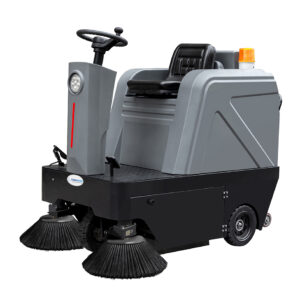
Return to shopIf you are searching for the best Ride On Floor Sweepers in Ontario, you are not alone. Businesses across manufacturing plants, logistics warehouses, automotive facilities, food processing centers, shopping malls, and distribution hubs across the province are moving away from manual sweeping and walk-behind machines toward high-performance ride on solutions.
At ScrubX, we specialize in commercial and industrial Ride On Floor Sweepers that Ontario businesses rely on for maximum productivity, operator comfort, and long-term cost efficiency. Whether you manage a mid-sized warehouse in Mississauga, a manufacturing plant in Hamilton, or a large logistics hub in Brampton, this page will help you:
Looking for other floor cleaning solutions? Explore our complete range including Walk Behind Floor Sweepers, Ride On Floor Scrubbers, Walk Behind Floor Scrubbers, Carpet Extractors, Carpet Vacuums & Dryers, and Floor Polishers — all available for Ontario businesses.
Ontario is Canada's most industrially active province. With thousands of manufacturing facilities, distribution centers, food processing plants, and commercial properties operating year-round, floor cleanliness is not optional — it is a safety and operational requirement.
Ontario's environment creates specific challenges for facility managers:
Using professional Ride On Floor Sweepers Ontario businesses trust helps you:
Manual brooms and push sweepers scatter dust and debris into the air. Walk-behind sweepers work for smaller spaces but become inefficient in facilities above 20,000 square feet. Ride on sweepers collect, contain, and store debris efficiently—covering large areas in a fraction of the time.
That is why more Ontario facility managers are switching to ride on floor cleaning machines engineered for commercial and industrial workloads.
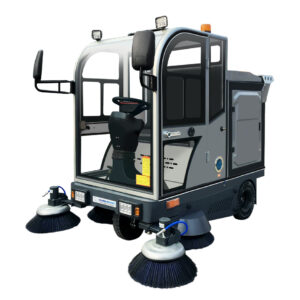
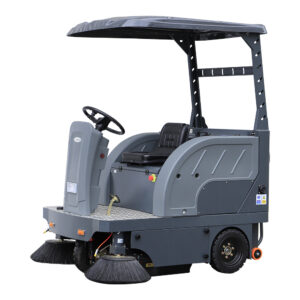
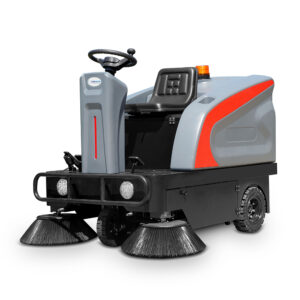
Ride On Floor Sweepers are high-capacity, operator-driven cleaning machines designed to collect dust, debris, sand, grit, and dry waste from large hard floor surfaces in a single pass. Instead of walking behind the machine, the operator sits comfortably on board and steers the sweeper through wide aisles, open bays, and large floor areas. The machine uses rotating main brushes and side brushes to sweep debris into a hopper, while an integrated filtration system captures fine dust particles and prevents them from re-entering the air.
Modern ride on sweepers are built for sustained productivity. Larger hoppers, powerful brush motors, wide cleaning paths, and commercial-grade batteries allow operators to clean tens of thousands of square feet per shift with minimal interruption.
For Ontario businesses searching for Ride On Floor Sweepers near me, these machines represent the most efficient and cost-effective solution for large-scale dry floor maintenance.
Many Ontario facilities still rely on push brooms or walk-behind sweepers, but these methods create significant operational limitations:
Problems with manual and walk-behind sweeping:
How ride on sweepers solve these problems:
This makes ride on sweepers especially valuable for Ontario businesses managing large facilities with daily or multi-shift cleaning requirements.
Ride on floor sweepers are ideal for medium to large commercial and industrial environments where cleaning speed, operator efficiency, and debris volume exceed the practical limits of smaller machines.
Ontario's Golden Horseshoe region — including Brampton, Mississauga, Milton, and Ajax — is home to some of Canada's largest logistics and fulfillment operations. These facilities deal with:
Ride on sweepers clean these environments efficiently without requiring large cleaning crews, and they integrate smoothly into shift-based operational schedules.
Ontario's manufacturing sector — particularly in Windsor, Hamilton, Cambridge, and Oshawa — generates significant floor debris including metal shavings, plastic granules, industrial dust, and packaging waste. Ride on sweepers:
Food-grade facilities in Ontario require strict cleanliness standards enforced by the Canadian Food Inspection Agency (CFIA) and provincial health regulations. Ride on sweepers:
Ontario's major retail destinations — from Scarborough Town Centre to Masonville Place in London — require consistent cleanliness across hundreds of thousands of square feet of foot traffic areas. Ride on sweepers:
Ontario's airports and transit hubs, including Toronto Pearson International Airport and Billy Bishop Toronto City Airport, experience continuous passenger traffic. Ride on sweepers:
Institutions such as the University of Toronto, Western University, and McMaster University maintain extensive facilities, including sports complexes, large corridors, and multi-building campuses. Ride on sweepers:
Ontario's major event facilities — including the Metro Toronto Convention Centre and Enercare Centre — require rapid turnaround cleaning between events. Ride on sweepers:
Ride on sweepers are compatible with a wide range of hard floor surfaces commonly found in Ontario commercial and industrial facilities:
Selecting the correct brush type for your floor surface ensures optimal debris collection without surface damage.
When evaluating Ride On Floor Sweepers in Ontario, consider the following performance factors:
Larger hoppers reduce the frequency of debris dumping, allowing operators to clean longer without interruption. For Ontario's large industrial facilities, hopper capacity directly impacts productivity per shift.
Ontario's manufacturing and automotive environments generate fine dust particles that can become airborne health hazards. High-quality filtration systems — including HEPA-compatible options — capture fine particles and protect both workers and the environment.
A wider brush deck and side brush reach cover more floor area per pass, reducing overall cleaning time. For facilities above 30,000 square feet, cleaning path width is a critical efficiency factor.
Commercial-grade batteries should support full shift operation without mid-shift recharging. Fast-charge options enable multi-shift coverage in operations that run around the clock.
Adjustable seating, intuitive controls, and smooth steering systems reduce operator fatigue during long cleaning sessions. Better operator comfort leads to more consistent cleaning performance and lower staff turnover.
Even in large facilities, ride on sweepers must navigate around racking systems, machinery, columns, and loading equipment. Tight turning radius and responsive steering are essential for effective coverage.
Selecting the right Ride On Floor Sweeper in Ontario requires a structured evaluation based on your specific operational needs.
Facilities Between 15,000 and 30,000 Square Feet Mid-sized warehouses, supermarkets, and manufacturing units benefit from entry-level ride on sweepers that balance investment with performance.
Facilities Between 30,000 and 80,000 Square Feet Large warehouses, distribution centers, and manufacturing plants require higher-capacity machines with extended runtime and wider cleaning paths.
Facilities Above 80,000 Square Feet Airports, large industrial plants, and logistics hubs require maximum-capacity, heavy-duty ride on sweepers for multi-shift coverage.
Dry Debris and Packaging Waste Common in logistics and e-commerce fulfillment centers. Standard ride on sweepers with high-capacity hoppers handle this effectively.
Fine Industrial Dust Common in automotive plants, woodworking facilities, and manufacturing environments in Ontario. Requires advanced filtration systems to capture airborne particles.
Mixed Debris — Seasonal Salt, Grit, and Industrial Waste Common across Ontario's year-round commercial and industrial facilities. Recommended solution: combine ride on sweeping with floor scrubbing for complete surface maintenance.
Budget decisions should factor in long-term savings, not just upfront purchase price.
| Investment Level | Recommended Model | Best For |
| Entry-Level | ScrubX 100 | Mid-sized warehouses, schools, retail |
| Mid-Range | ScrubX 200 | Large logistics and manufacturing |
| Premium Industrial | ScrubX 300 | Airports, heavy industry, large campuses |
Ontario facility managers who calculate cost per square foot cleaned consistently find that ride on sweepers deliver measurable return on investment within 12 to 18 months through reduced labor expenses.
Ontario businesses must comply with:
Ride on sweepers with enclosed hoppers and high-efficiency filtration systems support compliance across all of these regulatory frameworks.
Investing in a ride on sweeper delivers measurable operational advantages for Ontario facilities:
For warehouses exceeding 30,000 square feet in the Greater Toronto Area and surrounding regions, the ScrubX 200 or ScrubX 300 provides the hopper capacity, battery runtime, and cleaning path width needed for efficient shift-based operation. For mid-sized warehouses, the ScrubX 100 offers strong performance at a lower investment level.
ScrubX offers a complete range of commercial and industrial Ride On Floor Sweepers designed specifically for Ontario businesses. Our team provides product consultation, operational guidance, and after-sales support to ensure long-term satisfaction and performance.
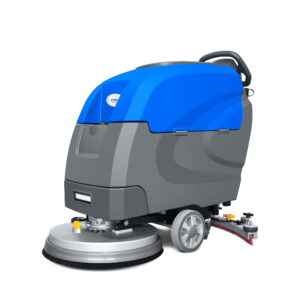
A ride-on floor sweeper is designed to collect dry debris, dust, sand, and grit from hard floor surfaces. A ride-on floor scrubber is designed to wash, scrub, and vacuum-dry wet or dirty floors. Many Ontario facilities benefit from using both — sweeping first to remove dry debris, then scrubbing to deep-clean the surface.
Proper maintenance ensures consistent performance and extends machine lifespan. Recommended schedule:
Ontario's winter season, with its salt and grit deposits, may require more frequent brush and hopper maintenance from November through March.
For Ontario facilities that sweep daily or across multiple shifts, purchasing delivers better return on investment within 12 to 18 months. Ownership provides consistent machine availability and full operational control and eliminates ongoing rental costs. Renting may suit short-term project needs or seasonal requirements.
Yes. Ride on sweepers with robust main brushes and high-capacity hoppers are well-suited to collecting the salt, sand, and grit tracked into Ontario facilities during winter months. Regular sweeping during winter prevents abrasive particles from scratching floor coatings and clogging drainage systems.