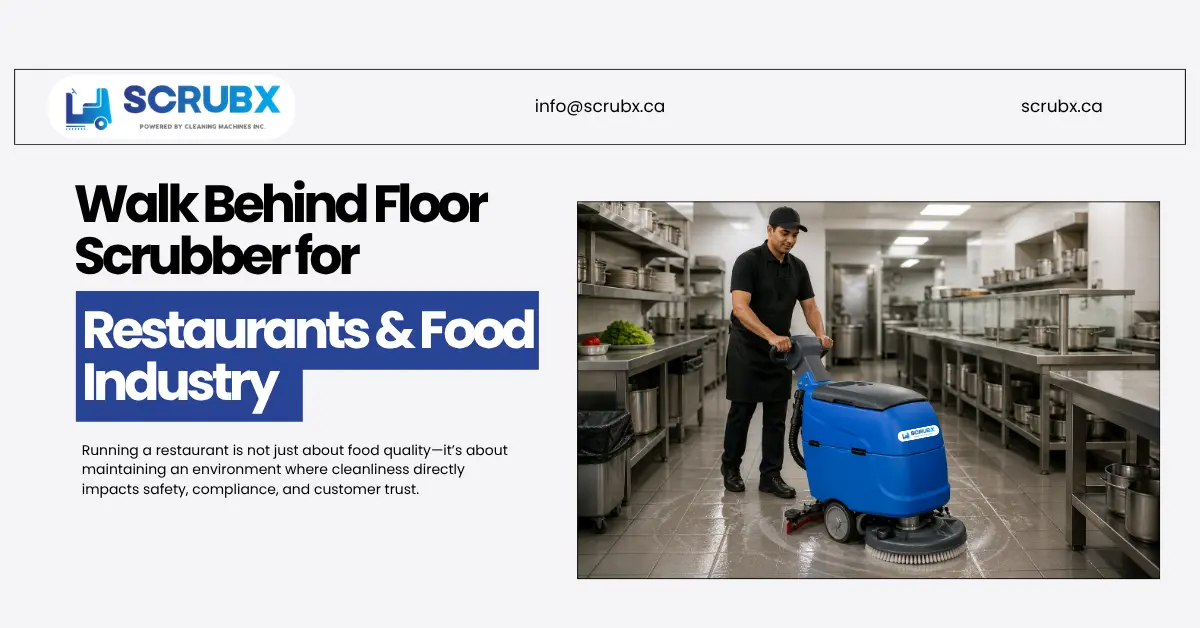
Running a restaurant is not just about food quality—it’s about maintaining an environment where cleanliness directly impacts safety, compliance, and customer trust. In commercial kitchens, floors are constantly exposed to grease, water, food particles, and heavy foot traffic. Unlike other industries, even a small lapse in hygiene can lead to serious consequences, including contamination risks and failed health inspections.
Grease buildup is one of the biggest hidden threats in food environments. It doesn’t just make floors look dirty—it creates slippery, unsafe surfaces, increases bacterial growth, and makes cleaning progressively harder over time. Manual mopping often spreads grease instead of removing it, leaving behind residue that compromises hygiene standards.
Poor floor cleaning doesn’t stay behind the scenes. Customers notice—whether it’s through unpleasant odors, sticky floors, or visible dirt in dining areas. More importantly, inspectors notice. Restaurants that fail to maintain proper hygiene face reputational damage, fines, or even temporary shutdowns.
This is where modern cleaning solutions become essential. Manual cleaning methods are no longer enough for today’s fast-paced food industry. Brands like Scrubx have become trusted in commercial environments because they provide efficient, consistent, and hygiene-focused cleaning solutions designed specifically for grease-heavy and high-traffic areas.
Why Is Floor Cleaning More Critical in Restaurants and Food Facilities?
Floor hygiene in restaurants goes far beyond appearance—it’s a core part of food safety compliance. Regulatory bodies in Canada require strict sanitation standards, especially in kitchens where contamination risks are high. Floors act as a collection point for grease, spills, and bacteria, making them a critical control area.
Grease buildup is unavoidable in cooking environments. Over time, it forms a sticky layer that traps dirt and microbes. Without proper cleaning, this layer becomes a breeding ground for bacteria, increasing the risk of cross-contamination. This directly affects food safety and can lead to serious health violations.
Another key factor is customer perception. Clean floors reflect a well-managed operation. Whether it’s a fine dining restaurant or a fast-food chain, visible cleanliness builds trust and enhances the overall experience.
Professional cleaning solutions from Scrubx are designed to address these challenges by ensuring deep cleaning, consistent results, and faster drying, helping restaurants maintain both compliance and operational efficiency.
What Cleaning Challenges Are Unique to Restaurant Kitchens?
How Do Grease and Oil Spills Affect Floor Hygiene?
The Problem: Constant Grease Exposure
Restaurant kitchens operate with continuous oil usage—frying, grilling, and cooking generate grease that settles on floors throughout the day.
Why It Happens
Airborne oil particles combine with dust and food debris, creating a sticky layer that traditional mops struggle to remove.
Operational Risk
This leads to slip hazards, bacterial growth, and failed hygiene inspections. Over time, grease buildup becomes harder to clean and more dangerous.
Practical Solution
Using a machine designed for grease removal ensures that floors are not just wiped but properly scrubbed and dried.
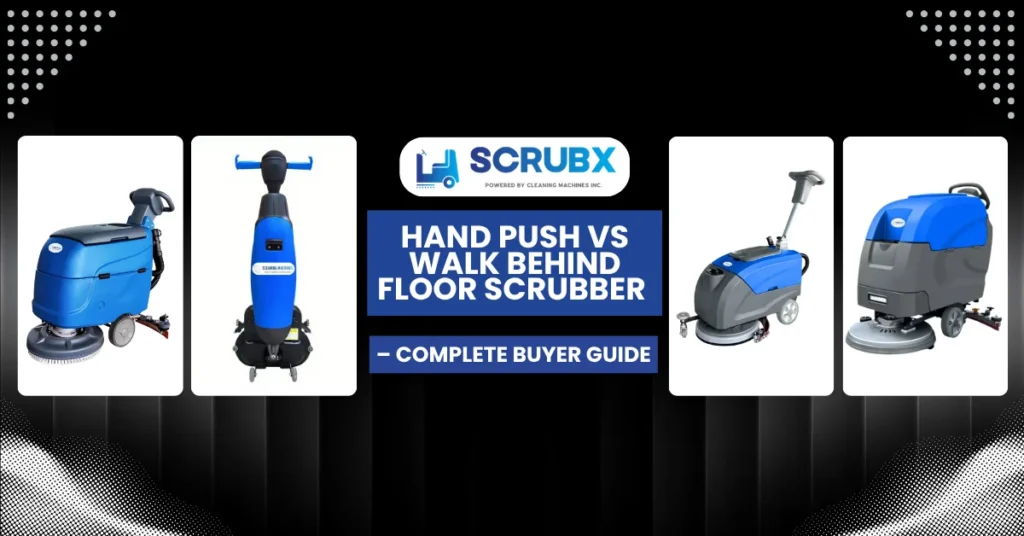
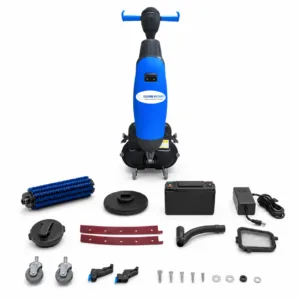
In compact, grease-heavy zones, the ScrubX MOP – Folding Hand Push Floor Scrubber allows targeted cleaning with better pressure and control compared to manual methods.
Restaurant Cleaning Challenges & Solutions
| Cleaning Challenge | Why It Happens | Operational Risk | Practical Solution |
| Grease buildup | Continuous cooking & oil use | Slip hazards, bacteria growth | Use scrubbers with strong grease removal |
| Tight spaces | Equipment & narrow layouts | Missed spots, contamination | Compact, maneuverable machines |
| Constant foot traffic | Busy kitchen operations | Delayed cleaning, unsafe floors | Quick, efficient scrubbers |
| Frequent spills | Ongoing food prep activity | Hygiene issues, accidents | Fast-cleaning, quick-dry machines |
Why Are Tight Kitchen Spaces Difficult to Clean Efficiently?
The Problem: Limited Movement
Commercial kitchens are packed with equipment, leaving very little room for cleaning.
Why It Happens
Cooking stations, storage racks, and prep tables create narrow pathways that restrict movement.
Operational Risk
Dirt accumulates in corners and under equipment, leading to hidden contamination zones.
Practical Solution
Compact scrubbers designed for maneuverability allow thorough cleaning without disrupting kitchen setup.
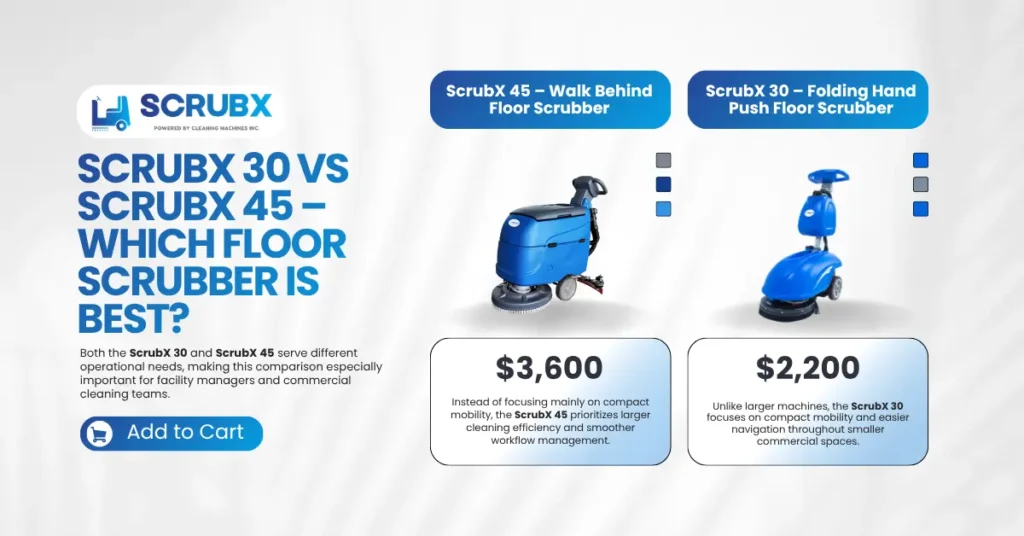
The ScrubX 30 – Folding Hand Push Floor Scrubber is ideal for navigating tight spaces while maintaining consistent cleaning performance.
How Do Restaurants Handle Continuous Cleaning During Busy Hours?
The Problem: Non-Stop Operations
Restaurants rarely stop functioning, making it difficult to schedule cleaning.
Why It Happens
High customer demand leads to constant kitchen activity and frequent spills.
Operational Risk
Delays in cleaning increase slip risks and hygiene issues, especially during peak hours.
Practical Solution
Efficient machines allow quick cleaning without interrupting workflow.
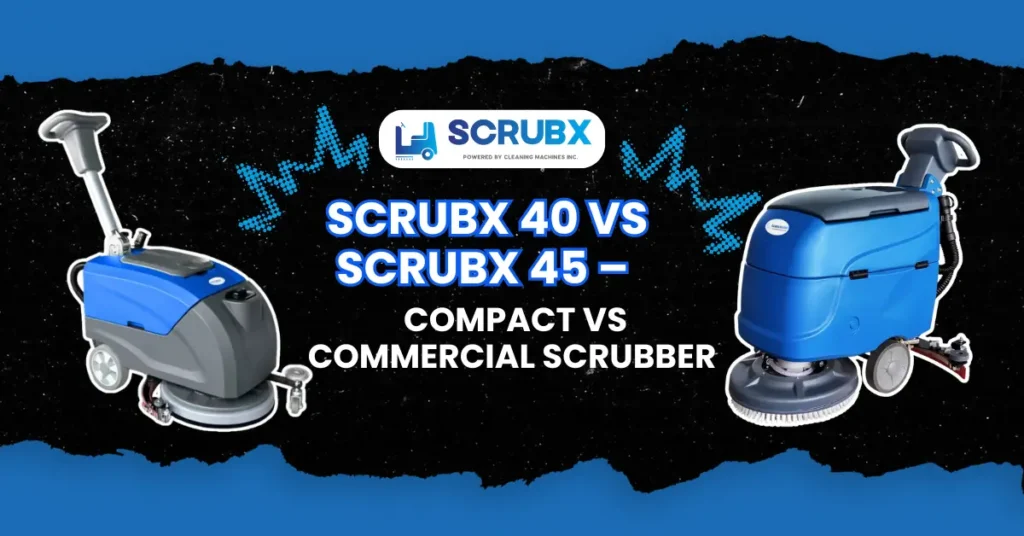
The ScrubX 45 – Walk Behind Floor Scrubber provides a balance of speed and efficiency, making it suitable for active kitchen environments.
How Should Restaurants Choose Floor Scrubbers Based on Space and Distance?
What Works Best for Small Kitchens and Prep Areas?
The Challenge
Small kitchens require precision cleaning without bulky equipment.
Solution
Lightweight and foldable machines provide flexibility and easy storage.
The ScrubX 40 – Foldable Hand Push Scrubber is well-suited for compact areas where maneuverability is essential.
What Is Ideal for Medium-Sized Restaurant Floors?
The Challenge
Dining areas and corridors require consistent cleaning with moderate coverage.
Solution
Walk-behind scrubbers provide balanced performance and efficiency.
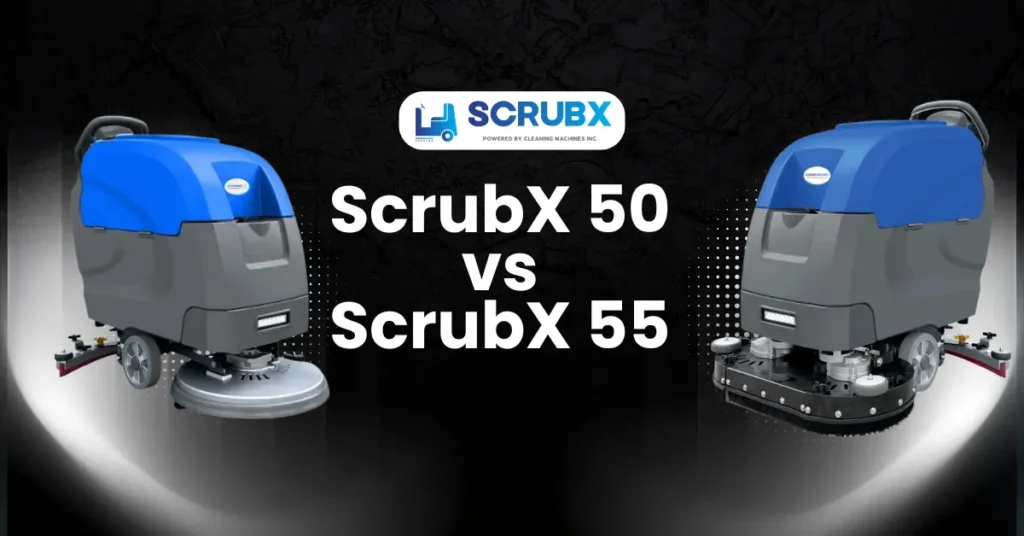
The ScrubX 50 – Walk Behind Floor Scrubber supports routine cleaning across medium-sized restaurant spaces.
How Can Large Food Facilities Improve Cleaning Efficiency?
The Challenge
Large kitchens and food production areas demand high productivity.
Solution
Advanced scrubbers reduce cleaning time while improving consistency.
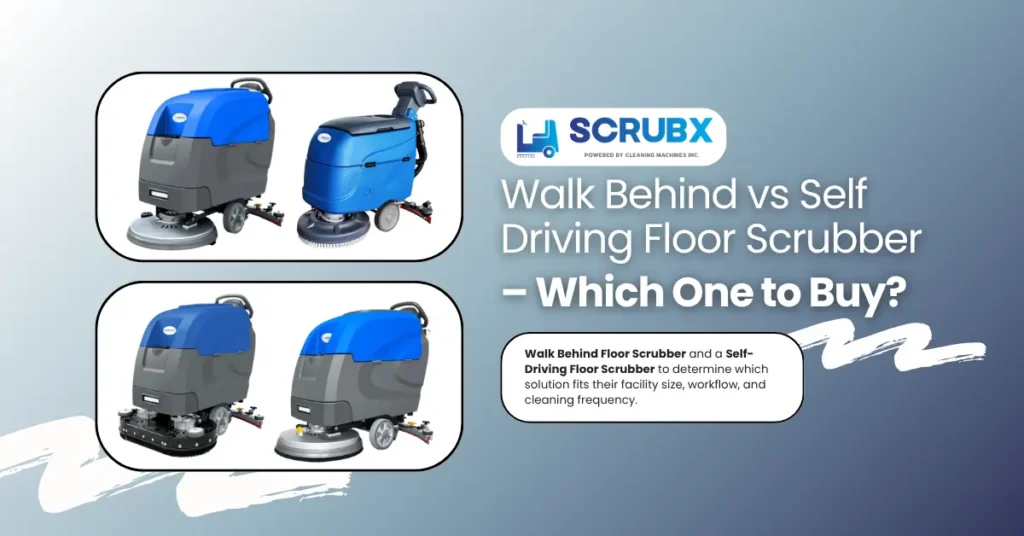
The ScrubX 50D – Two Methods For Self-driving Floor Scrubber enables efficient cleaning across larger areas with minimal operator effort.
Choosing the Right Scrubber by Restaurant Size
| Restaurant Area | Cleaning Requirement | Recommended Approach |
| Small kitchens | Tight movement, quick cleaning | Compact & foldable scrubbers |
| Medium spaces | Balanced coverage & efficiency | Walk-behind scrubbers |
| Large facilities | High productivity & speed | Self-driving scrubbers |
| Dining areas | Consistent appearance | Fast drying, low-noise machines |
How Can Restaurants Maintain Hygiene Without Slowing Down Operations?
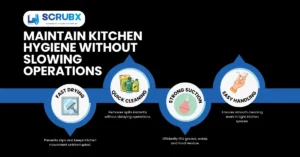
In fast-paced environments, cleaning must be both effective and unobtrusive. Restaurants cannot afford downtime, especially during service hours. This makes fast drying and minimal disruption critical factors.
Modern scrubbers are designed to clean and dry floors in a single pass, reducing hazards and allowing staff to continue working safely. Efficient water recovery systems ensure that no residue is left behind, maintaining hygiene without repeated cleaning cycles.
The ScrubX 55 – Self-Driving Floor Scrubber supports continuous operations by delivering high-performance cleaning with minimal manual effort.
What Features Matter Most in a Restaurant Floor Scrubber?
Choosing the right scrubber requires understanding the features that directly impact performance in food environments.
- Fast drying – Prevents slips and allows immediate use
- Strong suction – Removes grease, water, and debris effectively
- Easy handling – Ensures smooth operation in tight spaces
- Durable construction – Withstands heavy daily use
- Efficient water recovery – Maintains hygiene standards
In grease-heavy kitchens, machines like the ScrubX 50 – Walk Behind Floor Scrubber demonstrate how these features work together to deliver consistent results without increasing workload.
Key Features That Matter in Kitchen Cleaning Machines
| Feature | Why It Matters in Restaurants |
| Fast drying | Prevents slips and keeps operations running |
| Strong suction | Removes grease and dirty water effectively |
| Easy handling | Essential for tight kitchen layouts |
| Durability | Handles heavy daily usage |
| Efficient recovery system | Maintains hygiene and cleanliness |
How Do Walk Behind Floor Scrubbers Improve Food Safety Compliance?
Walk behind floor scrubbers play a critical role in maintaining compliance with food safety regulations. They provide consistent and measurable cleaning performance, which is essential for passing inspections.
Unlike manual methods, scrubbers ensure even cleaning across all surfaces. This reduces the risk of contamination and helps maintain hygiene standards required in commercial kitchens.
From an operational standpoint, these machines also support documentation and routine cleaning schedules, making it easier for restaurants to stay inspection-ready at all times. Their commercial-grade engineering ensures reliability, while consistent performance helps maintain long-term hygiene standards.
Why Do Food Businesses Trust Scrubx for Cleaning Solutions?
Scrubx has built its reputation by understanding the real challenges of commercial cleaning, especially in food environments. Restaurants require machines that can handle grease, operate in tight spaces, and deliver consistent results under pressure.
What sets Scrubx apart is its focus on practical performance rather than just specifications. Their machines are designed based on real-world usage, ensuring they meet the demands of busy kitchens.
Food businesses trust Scrubx because of:
- Proven reliability in commercial environments
- Durable machines built for daily use
- Consistent cleaning performance
- Strong understanding of hygiene requirements
This experience-driven approach makes Scrubx a dependable choice for restaurants aiming to maintain high standards.
FAQs
What is the best floor scrubber for restaurant kitchens?
The best scrubber depends on kitchen size and cleaning needs. Smaller kitchens benefit from compact machines, while larger areas require more powerful solutions. A good scrubber should handle grease effectively and provide fast drying. Choosing the right model ensures better hygiene and efficiency.
How often should restaurant floors be cleaned with a scrubber?
Restaurant floors should be cleaned daily, with high-traffic areas cleaned multiple times during busy hours. Regular scrubbing prevents grease buildup and maintains safety. Consistent cleaning also ensures compliance with hygiene regulations. Frequency depends on workload and kitchen activity.
Are walk behind scrubbers safe for kitchen environments?
Yes, walk behind scrubbers are designed for safe use in commercial kitchens. They reduce slip risks by drying floors quickly. Their controlled operation makes them suitable for tight spaces. Proper use improves both safety and cleaning efficiency.
How do scrubbers handle grease and oil buildup?
Scrubbers use brushes, water, and suction to break down and remove grease. Unlike mopping, they don’t spread residue. Strong suction ensures dirty water is collected effectively. This results in cleaner and safer floors.
What size scrubber is best for a restaurant?
The ideal size depends on the layout and area. Small kitchens need compact machines, while larger spaces require higher-capacity scrubbers. Choosing the right size improves efficiency and reduces cleaning time. It’s important to match the machine with operational needs.
Can restaurants clean floors during working hours?
Yes, modern scrubbers are designed for use during operations. They clean quickly and dry floors immediately, minimizing disruption. This allows staff to continue working safely. It’s an effective way to maintain hygiene without stopping service.