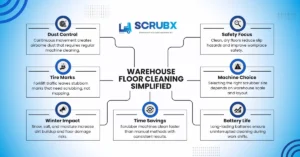
Warehouse floor cleaning isn’t just about keeping things looking neat—it directly impacts safety, productivity, and operational efficiency. In Canadian warehouses, where large floor areas, constant equipment movement, and seasonal challenges are part of daily operations, cleaning quickly becomes more complex than most managers expect. Dust keeps circulating, tire marks build up in high-traffic zones, and winter conditions bring in moisture and salt that can damage floors over time.
This is where many facilities struggle. Traditional cleaning methods like sweeping and mopping simply can’t keep up with the pace and scale of warehouse environments. They take too long, require more labour, and often fail to deliver consistent results. As a result, businesses end up dealing with recurring dirt, unsafe floors, and wasted time that could be spent on core operations.
That’s why choosing the right floor scrubber for warehouse use is no longer optional—it’s a strategic decision. In this guide, you’ll understand real warehouse cleaning challenges, how modern machines solve them, and how to choose the right solution based on your facility size, layout, and daily workload.
Why Warehouse Floor Cleaning Is More Complex Than It Looks
At first glance, cleaning a warehouse floor might seem straightforward—just sweep, mop, and move on. But in reality, warehouse environments are far more demanding. You’re dealing with massive floor areas, constant forklift movement, heavy pallets, and different types of dirt accumulating throughout the day.
Dust doesn’t just sit on the surface—it gets pushed around by equipment. Tire marks build up over time. Oil spills and moisture create slippery zones that can quickly turn into safety hazards.
Traditional cleaning methods like mopping simply can’t keep up. They spread dirt instead of removing it efficiently and take too much time in large facilities. That’s why many warehouse operators across Canada are shifting toward modern floor scrubber machines designed specifically for industrial environments.
What Makes Warehouse Cleaning So Challenging in Canada?
Warehouse cleaning challenges are not just about size—they’re about the type of dirt and the environment itself.
Dust from Constant Movement
Every time forklifts or pallet jacks move, they lift fine dust into the air, which eventually settles back onto floors. This creates a continuous cleaning cycle that manual methods struggle to control.
Tire Marks and Industrial Residue
Rubber marks from forklifts and residue from packaging materials can build up quickly, especially in high-traffic zones. These aren’t easy to remove with basic cleaning tools.
Winter Conditions
Canadian warehouses face an extra layer of difficulty during winter. Snow, salt, and moisture get tracked inside, leading to stubborn grime and increased corrosion risk for floors.
Safety Risks
Wet or dirty floors significantly increase the chances of slips and falls. In busy warehouses, even a small hazard can disrupt operations or cause injuries.
How Do Floor Scrubber Machines Solve Warehouse Cleaning Problems?
A floor scrubber for warehouse environments is designed to tackle these exact issues.
Instead of spreading dirt like a mop, scrubbers use brushes, water, and suction to lift and remove contaminants in one pass. This leads to:
- Faster cleaning across large areas
- Consistent results regardless of operator
- Reduced water and chemical usage
- Improved floor safety with quicker drying times
More importantly, these machines turn cleaning from a time-consuming task into a streamlined process that fits into daily warehouse operations.
How to Choose the Right Cleaning Schedule for Your Warehouse
Even with the best floor scrubber for warehouse use, results depend heavily on how often and when you clean. Many warehouses either over-clean low-impact areas or ignore high-traffic zones until problems build up.
A smarter approach is to align your cleaning schedule with actual warehouse activity.
High-Traffic Zones
Areas like loading docks, dispatch lanes, and forklift routes should be cleaned daily. These zones accumulate dust, tire marks, and debris much faster than other areas.
Medium-Use Areas
Storage aisles and packing zones can typically be cleaned 2–3 times per week, depending on activity levels.
Low-Traffic Sections
Corners, rarely used storage areas, or back sections can be cleaned weekly without affecting overall cleanliness.
By adjusting your cleaning frequency based on usage, you not only improve results but also extend the life of your floors and equipment.
| Area Type | Recommended Frequency | Reason |
| High-Traffic | Daily | Fast dirt buildup |
| Medium-Traffic | 2–3 times/week | Moderate usage |
| Low-Traffic | Weekly | Minimal activity |
Which Type of Floor Scrubber Is Right for Your Warehouse Size?
Small Warehouses & Storage Areas
Smaller facilities often deal with tight aisles and limited storage space. Here, maneuverability matters more than raw power.
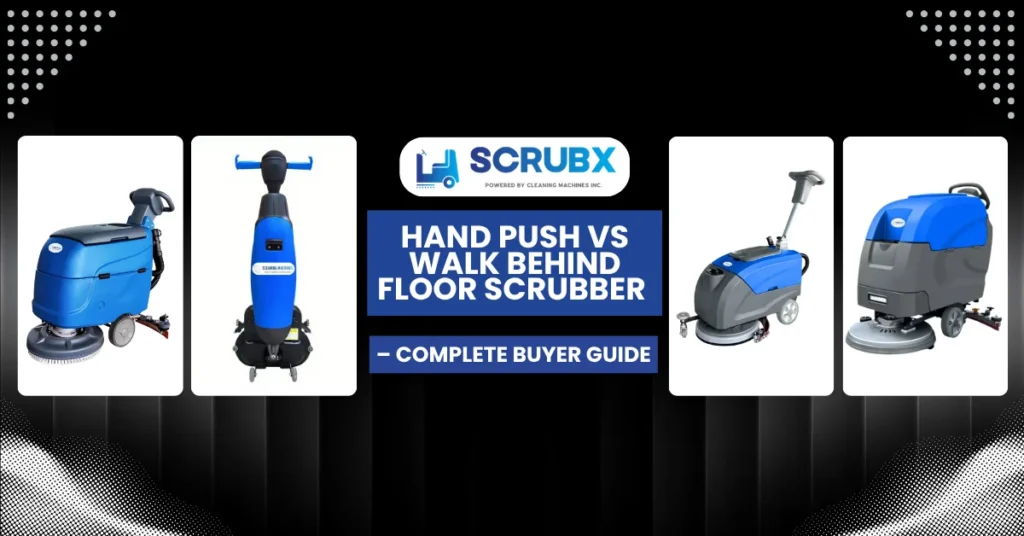
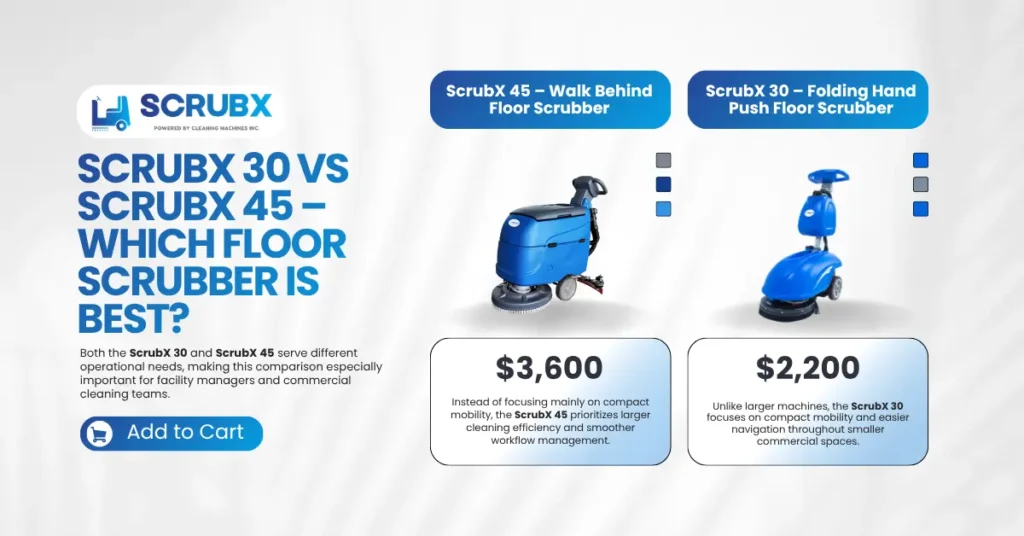
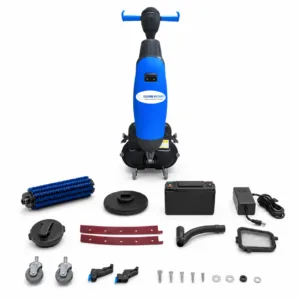
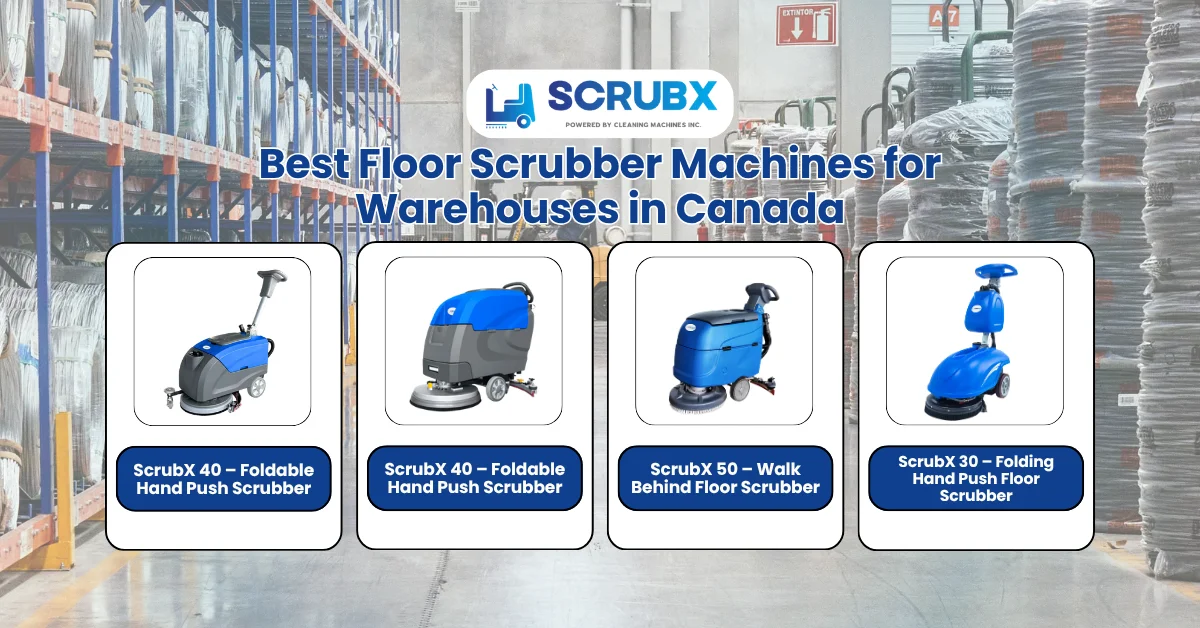
A compact machine like the ScrubX 30 – Folding Hand Push Floor Scrubber fits naturally into this environment. It allows operators to clean efficiently without struggling in narrow spaces, making it a practical upgrade from manual mopping.
Medium-Sized Warehouses
As warehouse size increases, so does the need for balance between coverage and flexibility.
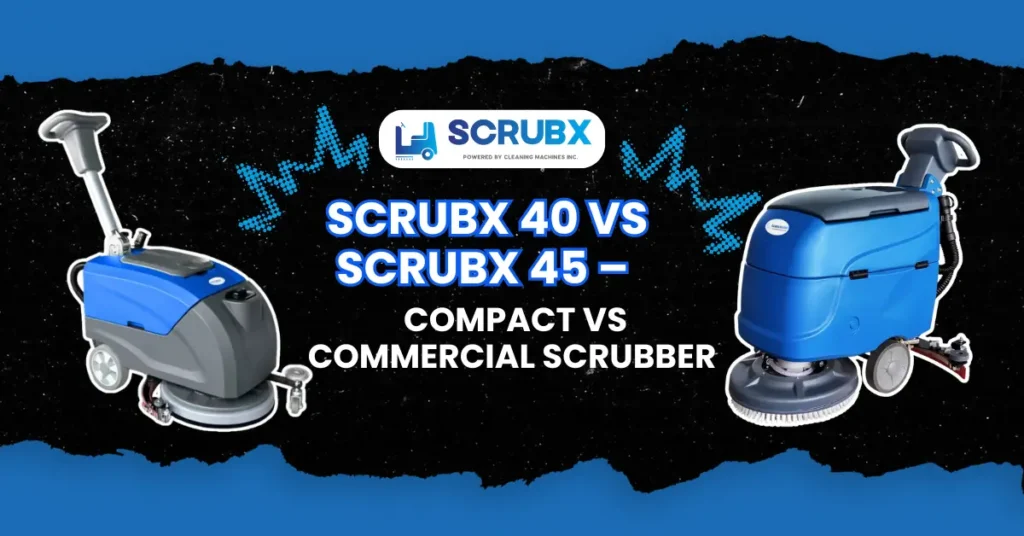
In these settings, a machine like the ScrubX 45 – Walk Behind Floor Scrubber helps maintain productivity without sacrificing control. It covers more ground in less time while still being easy to handle around shelving units and equipment.
Large Warehouses & Distribution Centers
Large facilities require machines that can handle long cleaning cycles and wide floor areas without constant interruptions.
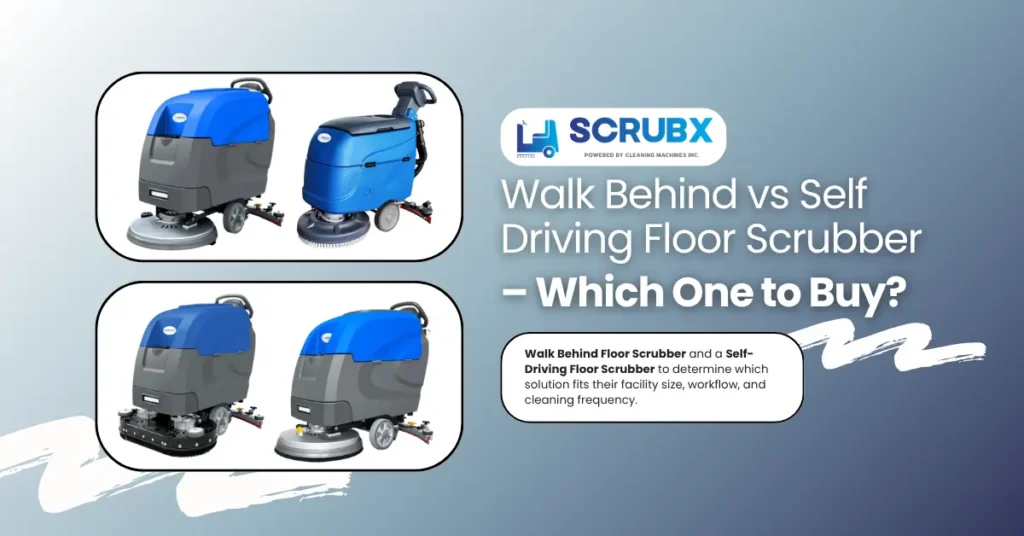
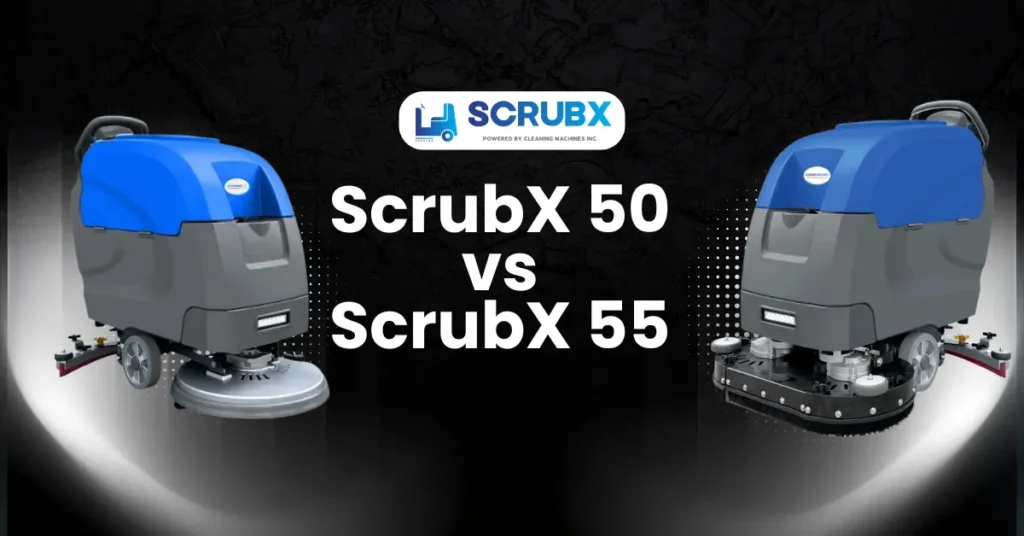
For this level, options like the ScrubX 50 – Walk Behind Floor Scrubber are often more suitable. They are built for higher productivity, allowing operators to clean expansive areas efficiently while reducing downtime for refilling or recharging.
High-Tech / Automated Facilities
Modern warehouses are increasingly adopting automation—not just in logistics but also in cleaning.
In such environments, advanced solutions like the ScrubX 55 – Self-Driving Floor Scrubber align well with operational efficiency goals. These machines reduce manual involvement and ensure consistent cleaning standards across the facility.
| Warehouse Size | Recommended Type | Key Benefit |
| Small | Walk-behind compact | Easy maneuverability |
| Medium | Mid-size scrubber | Balanced performance |
| Large | Ride-on scrubber | Faster area coverage |
Walk-Behind vs Ride-On Scrubbers – What Works Better in Warehouses?
One common decision buyers face is choosing between walk-behind and ride-on scrubbers. The right choice depends on your warehouse size, layout, and cleaning frequency.
Walk-Behind Scrubbers
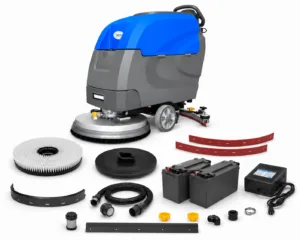
These are ideal for small to medium warehouses where maneuverability is important. They work well in tight aisles and areas with frequent obstacles. They’re also more budget-friendly and easier to store.
Ride-On Scrubbers
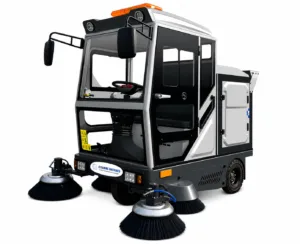
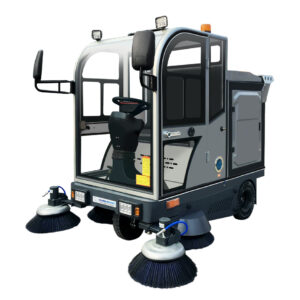
For large warehouses and distribution centers, ride-on machines significantly improve productivity. Operators can cover more area in less time, making them suitable for facilities with long cleaning shifts and open floor plans.
Instead of focusing on price alone, think in terms of efficiency. A ride-on machine may cost more upfront but can save substantial time and labour in larger operations.
What Features Actually Matter in a Warehouse Floor Scrubber?
Choosing the right machine isn’t about picking the most expensive option—it’s about selecting features that match your operational needs.
Cleaning Path Width
A wider cleaning path means fewer passes, which is crucial in large warehouses. However, tighter spaces may require a narrower design for better access.
Tank Capacity
Larger tanks allow for longer cleaning sessions without interruptions. This becomes especially important in facilities where stopping frequently can disrupt workflows.
Battery Performance
Warehouses often operate in shifts. A scrubber with strong battery life ensures uninterrupted cleaning without frequent charging breaks.
Maneuverability
In areas with racks and tight corners, easy handling is essential. Machines like the ScrubX 40 – Foldable Hand Push Scrubber are designed to strike a balance between performance and control.
Durability
Industrial environments are tough. A reliable machine should withstand heavy use, rough surfaces, and exposure to dust and moisture without frequent breakdowns.
How Much Time and Labour Can You Save with the Right Machine?
Switching from manual cleaning to a machine isn’t just about convenience—it directly impacts productivity.
| Factor | Manual Cleaning | Floor Scrubber Machine | Factor |
| Time Required | High | Low | Time Required |
| Labour Dependency | Multiple workers | Single operator | Labour Dependency |
With the right industrial scrubber in Canada, many warehouses report:
- Up to 50–70% reduction in cleaning time
- Lower labour dependency
- More consistent cleaning results
What Are Common Mistakes Buyers Make When Choosing a Floor Scrubber?
One of the biggest issues isn’t the machine—it’s choosing the wrong one.
Choosing the Wrong Size
A machine that’s too small will slow down operations, while an oversized one may struggle in tight spaces.
Ignoring Battery Life
Short battery cycles can interrupt cleaning schedules and reduce overall efficiency.
Not Considering Layout
Warehouses with narrow aisles require different machines compared to open-floor layouts.
Overpaying for Unnecessary Features
Advanced features are useful—but only if they match your needs. Otherwise, they just increase costs without adding value.
How Does Scrubx Ensure Reliable Cleaning Performance?
Scrubx has built its reputation around practical, performance-focused machines designed for real industrial use.
Instead of focusing on unnecessary complexity, their machines are engineered to handle everyday warehouse challenges—dust, residue, and heavy traffic—without frequent maintenance issues.
Their approach emphasizes:
- Durable construction for long-term use
- Efficient water and energy usage
- Consistent cleaning performance across different warehouse types
This makes them a dependable choice for facilities that prioritize reliability over gimmicks.
Real Warehouse Cleaning Scenarios
High-Traffic Logistics Warehouse
A facility with constant forklift movement struggled with tire marks and dust buildup. By switching to a mid-sized scrubber like the Scrubx 45, they reduced cleaning time and maintained cleaner floors throughout the day.
Cold Storage Facility
Moisture and condensation created slippery conditions. A battery-powered scrubber helped maintain dry, safe floors without interrupting operations.
Manufacturing Warehouse
Oil spills and debris were common. A heavy-duty option such as the ScrubX 50D – Two Methods For Self-driving Floor Scrubber improved cleaning consistency and reduced safety risks significantly.
FAQs
What is the best floor scrubber for a warehouse?
The best machine depends on your warehouse size, traffic level, and cleaning challenges. Smaller warehouses need compact, maneuverable scrubbers, while large distribution centers require high-capacity machines with wider cleaning paths. Instead of focusing on “one best option,” it’s better to match the machine to your daily cleaning workload and floor conditions.
How often should warehouse floors be cleaned?
Cleaning frequency depends on how busy your warehouse is. High-traffic facilities with forklifts and continuous movement should be cleaned daily to control dust and tire marks. In lower-traffic areas, cleaning can be scheduled a few times a week, but neglecting regular cleaning often leads to buildup that becomes harder and more expensive to remove later.
Are battery-powered scrubbers better for warehouses?
Yes, in most cases they are more practical. Battery-powered machines allow operators to move freely without dealing with cords, which is essential in large or busy warehouses. They also reduce the risk of accidents and make it easier to clean around equipment and storage racks without interruptions.
What size scrubber do I need for my warehouse?
The right size depends on your floor area and aisle width. If your warehouse has narrow aisles and tight spaces, a compact machine will be more effective. For larger open areas, a bigger scrubber with a wider cleaning path will save significant time. Choosing the wrong size can either slow down cleaning or make maneuvering difficult.
How do floor scrubbers handle oil and grease in warehouses?
Modern scrubbers are designed to break down stubborn contaminants like oil and grease using a combination of brushes, water flow, and cleaning solutions. Unlike mopping, which often spreads grease around, scrubbers lift and remove it completely, leaving the floor cleaner and safer for daily operations.
Can one floor scrubber clean different types of warehouse floors?
Yes, most machines are versatile enough to clean concrete, epoxy-coated, tile, and sealed floors. The key is using the right brush type and cleaning settings for each surface. This flexibility makes scrubbers a long-term investment, especially for warehouses with mixed flooring areas.
How much labour can a floor scrubber actually save?
A single operator using a scrubber can often do the work of multiple workers using manual methods. This not only reduces labour costs but also ensures faster and more consistent cleaning. Over time, this efficiency helps businesses reallocate staff to more productive tasks instead of repetitive cleaning work.