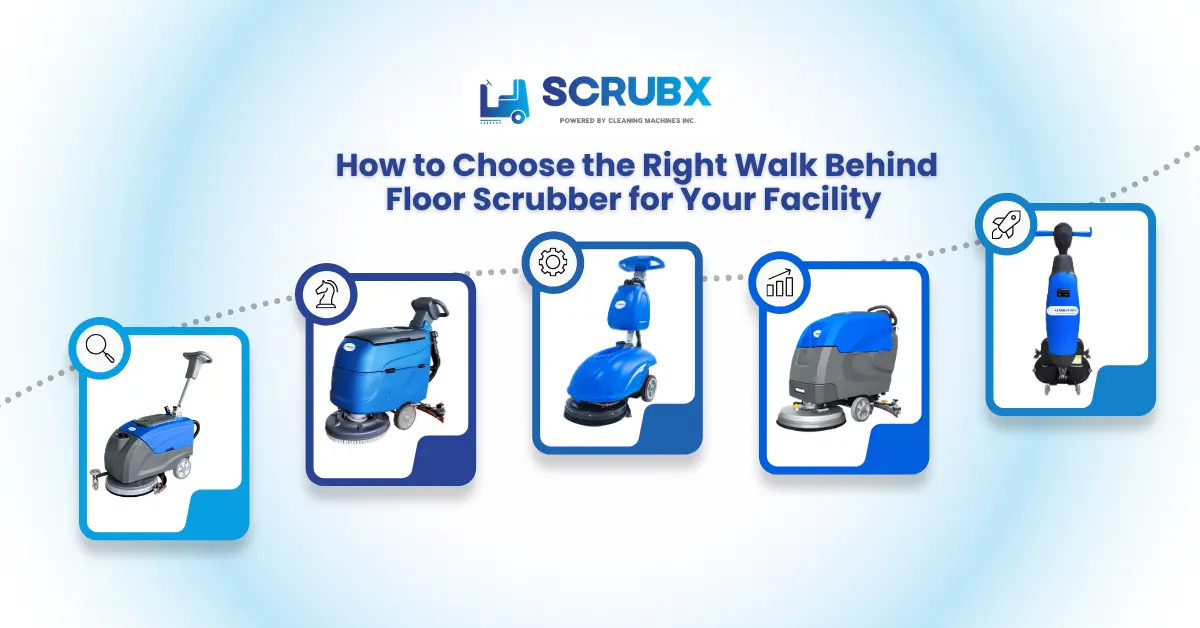
Choosing a floor scrubber sounds simple—until you realize how many options exist. Most buyers start with a price range in mind, scroll through a few models, and assume that a “bigger” or “more powerful” machine is automatically better. That’s where things go wrong.
The reality is this: the wrong scrubber doesn’t just underperform—it wastes time, increases labor costs, and shortens the life of your floors. Many businesses end up replacing their machine within a year because it simply doesn’t fit their facility.
Instead of focusing on price or popularity, the right approach is to match the machine to your actual needs. That’s where brands like Scrubx come in—not just as equipment providers, but as practical guides helping businesses make smarter decisions.
This guide walks you through the full buying journey: from confusion to clarity, from wrong choices to the right investment.
Why Is Choosing the Right Walk Behind Floor Scrubbers So Important for Your Facility?
A Walk behind floor scrubbers isn’t just a cleaning tool—it directly impacts how efficiently your operations run.
When the machine fits your facility:
- Cleaning takes less time
- Floors look consistently better
- Staff fatigue is reduced
- Long-term maintenance costs drop
But when it doesn’t:
- Cleaning becomes inconsistent
- Operators struggle with maneuverability
- Water and chemical usage increases
- Productivity drops
For example, using a large scrubber in a tight retail space leads to missed corners and inefficient cleaning paths. On the other hand, using a small manual unit in a warehouse wastes hours of labor daily.
The right choice aligns with your workflow—not against it.
What Are the Most Common Mistakes Buyers Make When Choosing a Scrubber?
Most buyers don’t make bad decisions intentionally—they simply don’t know what to evaluate.
1. Choosing the wrong size
A machine that’s too large becomes difficult to handle. Too small, and it increases cleaning time.
2. Ignoring tank capacity
Small tanks require frequent refills, slowing down operations.
3. Buying based on price alone
A cheaper machine often leads to higher long-term costs.
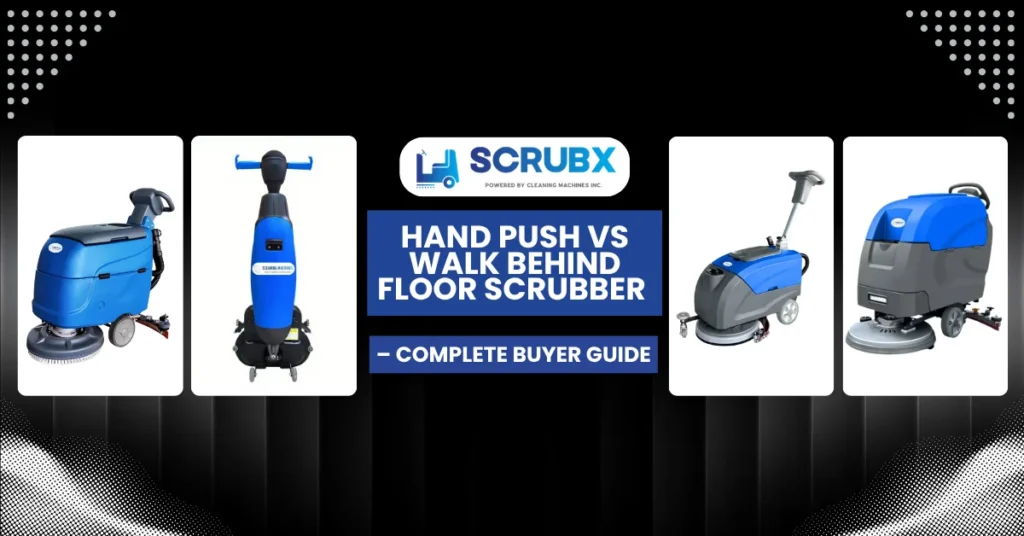
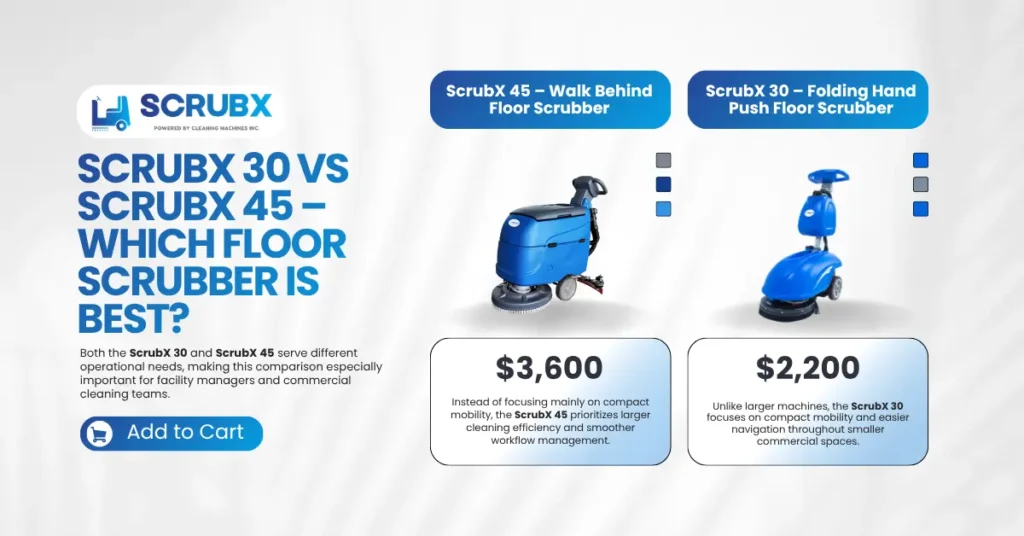
A common example is small businesses choosing ultra-basic manual tools without considering workload. While a compact solution like the ScrubX 30 – Folding Hand Push Floor Scrubber works well for tight spaces, it becomes inefficient if used in larger areas with higher cleaning demands.
The mistake isn’t the product—it’s the mismatch.
How Do You Evaluate Your Facility Before Buying a Scrubber?
Before even looking at machines, you need to understand your facility.
Ask yourself:
- How large is the cleaning area?
- What type of dirt do you deal with?
- How busy is the space during the day?
Key evaluation factors
- Floor size
- Small: shops, cafés, offices
- Medium: schools, clinics, supermarkets
- Large: warehouses, factories
- Dirt type
- Light dust vs heavy industrial debris
- Oil, grease, or spills
- Traffic level
- Low foot traffic
- Constant movement
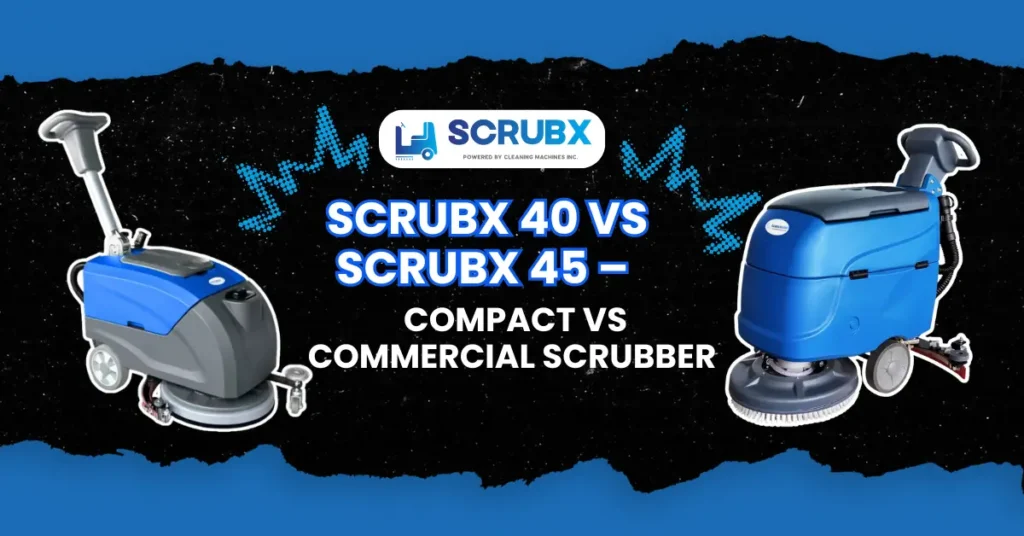
For example, a medium-sized facility with moderate traffic might benefit from a balanced solution like the ScrubX 45 – Walk Behind Floor Scrubber, which offers efficiency without being overly complex.
Skipping this evaluation step is where most wrong decisions begin.
What Size Scrubber Do You Actually Need?
This is one of the most important decisions—and one of the most misunderstood.
| Facility Size | Cleaning Challenge | Recommended Type | Ideal Outcome |
| Small | Tight space, low staff | Manual / Compact | Easy maneuverability |
| Medium | Regular cleaning workload | Walk Behind | Balanced productivity |
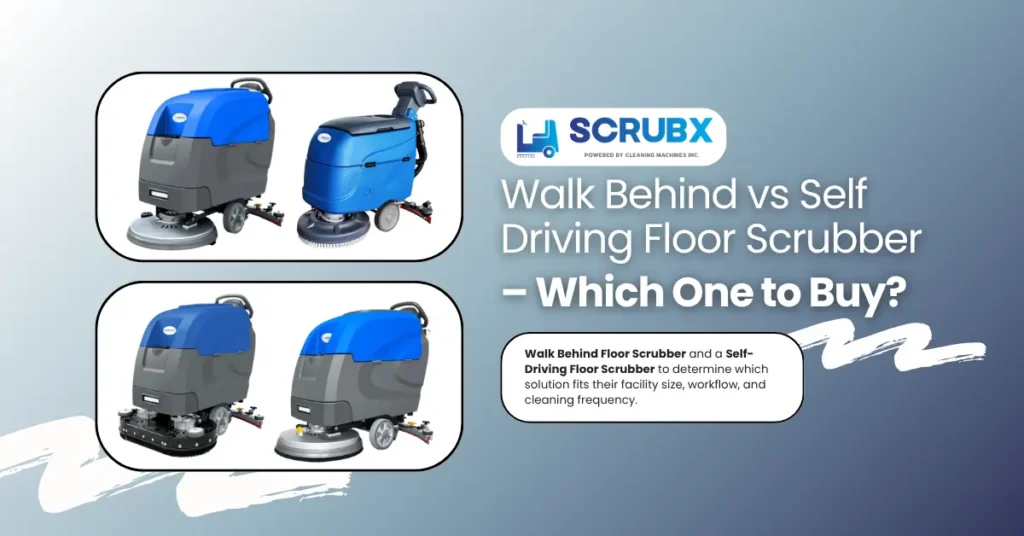
| Large | Time-consuming cleaning | Self-Driving | Faster coverage, less labor |
Small Spaces
Problem:
Tight areas, limited storage, and minimal staff.
What you need:
- Compact design
- Easy maneuverability
- Quick setup
Recommendation:
Manual or compact walk-behind units.
A solution like the ScrubX MOP – Folding Hand Push Floor Scrubber works well in cafés or small retail stores where flexibility matters more than speed.
Medium Facilities
Problem:
Moderate floor space with regular cleaning needs.
What you need:
- Balanced productivity
- Decent tank capacity
- Easy operation
Recommendation:
Standard walk-behind scrubbers.
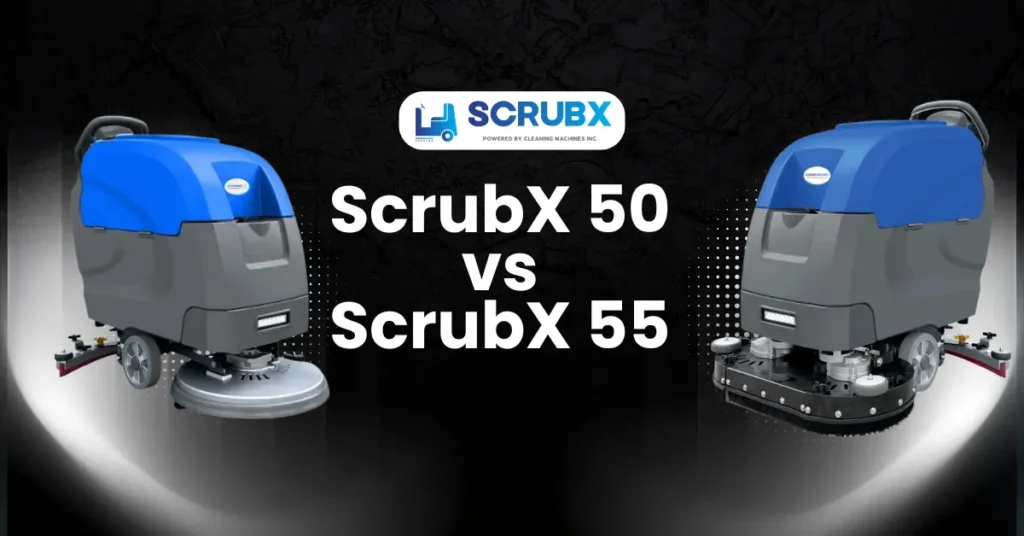
The ScrubX 50 – Walk Behind Floor Scrubber is a practical choice here, offering enough coverage without overwhelming the operator.
Large Areas
Problem:
Time-consuming cleaning and high labor costs.
What you need:
- High efficiency
- Large tanks
- Reduced manual effort
Recommendation:
Self-driving or advanced systems.
For example, the ScrubX 55 – Self-Driving Floor Scrubber helps reduce operator fatigue while covering large areas quickly.
How Does Floor Type Affect Your Scrubber Choice?
Not all floors behave the same—and your scrubber must adapt.
Common floor types
Tiles
- Require gentle but consistent cleaning
- Risk of streaking
Concrete
- Porous surface
- Needs stronger brush pressure
Industrial floors
- Heavy dirt, grease, and debris
- Require durable machines
If you’re dealing with mixed surfaces, flexibility becomes crucial. A machine like the ScrubX 40 – Foldable Hand Push Scrubber offers adaptability in environments where floor conditions change frequently.
Ignoring floor type often leads to poor cleaning results—even with a good machine.
How Important Is Tank Capacity and Battery Life?
This is a hidden factor many buyers overlook.
Why it matters
- Larger tanks = fewer interruptions
- Better battery = longer cleaning cycles
What happens if you ignore it?
- Frequent refilling
- Increased downtime
- Lower productivity
In facilities with continuous cleaning needs, a model like the ScrubX 50D – Two Methods For Self-driving Floor Scrubber can support longer operations without constant stopping.
Think of tank capacity and battery as productivity drivers—not just features.
Should You Choose a Manual, Walk Behind, or Self-Driving Scrubber?
Each type serves a different purpose.
Manual scrubbers
Best for:
- Small spaces
- Budget-conscious buyers
Limitations:
- Labor-intensive
- Slower cleaning
Walk-behind scrubbers
Best for:
- Medium-sized facilities
- Regular cleaning routines
Advantages:
- Balanced efficiency
- Easy to operate
Self-driving scrubbers
Best for:
- Large commercial spaces
- High-frequency cleaning
Advantages:
- Minimal operator effort
- Faster coverage
| Scrubber Type | Best For | Key Advantage | Limitation |
| Manual | Small spaces | Low cost, easy to store | High labor effort |
| Walk Behind | Medium facilities | Balanced efficiency | Limited for large areas |
| Self-Driving | Large facilities | Fast, low operator effort | Higher investment |
Choosing the wrong type is one of the biggest causes of dissatisfaction. For instance, upgrading from manual cleaning to a semi-automated option like the ScrubX 50 – Walk Behind Floor Scrubber can dramatically improve efficiency without requiring a full transition to autonomous systems.
What Features Should You Never Ignore When Buying a Scrubber?
Features are often misunderstood. Buyers either ignore them—or overvalue the wrong ones.
| Factor | Why It Matters | Impact on Decision |
| Brush Pressure | Removes tough dirt | Better cleaning results |
| Tank Capacity | Reduces refill frequency | Saves time |
| Battery Life | Supports longer cleaning | Improves efficiency |
| Mobility | Easy handling in tight areas | Better usability |
| Maintenance | Simplifies upkeep | Lower long-term cost |
Focus on these essentials
- Brush pressure
- Determines cleaning effectiveness
- Critical for stubborn dirt
- Mobility
- Tight turning radius
- Ease of handling
- Maintenance
- Easy tank cleaning
- Accessible components
A machine like the ScrubX 45 – Walk Behind Floor Scrubber balances these features well, making it suitable for operators who need reliability without complexity.
Avoid flashy features that don’t impact real performance.
How Can You Match the Scrubber to Your Cleaning Frequency?
Cleaning frequency directly affects what type of machine you need.
Daily cleaning
- Requires durable machines
- Consistent performance
Weekly cleaning
- Moderate usage
- Flexibility matters
Heavy-duty usage
- Industrial-grade equipment
- High endurance
For facilities with frequent cleaning schedules, upgrading from basic tools to something like the ScrubX 55 – Self-Driving Floor Scrubber can significantly reduce long-term labor costs.
Your scrubber should match how often you clean—not just how big your space is.
How Do You Calculate ROI Before Buying a Floor Scrubber?
Many buyers skip this step—and regret it later.
Key ROI factors
Costs:
- Machine price
- Maintenance
- Consumables
Savings:
- Reduced labor hours
- Faster cleaning cycles
- Lower water and chemical use
Real example
Switching from manual mopping to a compact solution like the ScrubX 30 – Folding Hand Push Floor Scrubber can cut cleaning time in half for small businesses.
Over time, that translates into real cost savings—even if the initial investment seems higher.
ROI isn’t about price—it’s about value over time.
Why Do Businesses Across Canada Trust Scrubx?
Scrubx has built its reputation by focusing on real-world cleaning challenges—not just product features.
Experience
Years of understanding commercial cleaning needs across industries.
Reliability
Machines designed for consistent performance in demanding environments.
Practical design
Products built around usability—not complexity.
Commercial expertise
Helping businesses choose the right machine instead of pushing the most expensive one.
This approach makes Scrubx a trusted partner rather than just a supplier.
How Do You Make the Final Buying Decision?
After evaluating everything, you still need a clear decision process.
Step-by-step checklist
- Define your facility size
- Identify your cleaning frequency
- Understand your floor type
- Set a realistic budget
- Match machine type to your needs
- Compare productivity—not just price
- Choose a reliable brand
If you follow this process, you won’t just buy a scrubber—you’ll invest in a solution that actually works.
FAQs
How do I choose the right floor scrubber?
Start by evaluating your facility size, floor type, and cleaning frequency. Then match these factors with the right machine type—manual, walk-behind, or self-driving. Avoid focusing only on price and instead consider long-term efficiency.
What size scrubber do I need?
It depends on your cleaning area. Small spaces require compact machines, while large facilities benefit from high-capacity or self-driving scrubbers. Choosing the wrong size can either slow you down or make operation difficult.
Are walk behind scrubbers suitable for all businesses?
Walk-behind scrubbers are ideal for medium-sized facilities and regular cleaning tasks. However, they may not be efficient for very large areas or extremely tight spaces where either smaller or automated machines work better.
How long does a scrubber last?
A well-maintained scrubber can last 5–10 years depending on usage and build quality. Regular maintenance and proper operation significantly extend its lifespan.
What is the average cost of a scrubber?
Costs vary widely depending on size and features. Basic models are more affordable, while advanced self-driving machines require a higher investment. However, the real cost should be evaluated based on long-term ROI.
Is a scrubber better than manual cleaning?
Yes, in most commercial environments. Scrubbers provide faster, more consistent cleaning while reducing labor costs. They also improve hygiene and safety compared to traditional mopping methods.