Walk into most commercial facilities today—whether it’s a retail store, warehouse, hospital, or office—and you’ll still find a mop bucket sitting in a corner. Despite massive advancements in cleaning technology, traditional mopping remains one of the most commonly used methods. Why? Because it’s familiar, low-cost upfront, and doesn’t require training.
But in 2026, that approach is becoming increasingly outdated.
Businesses today are dealing with larger floor areas, stricter hygiene standards, rising labor costs, and higher expectations for cleanliness. What worked ten years ago is now creating inefficiencies that many businesses don’t even realize they’re paying for.
This is where the comparison between a walk behind floor scrubber vs mop becomes critical.
Companies like Scrubx are helping businesses transition from outdated cleaning methods to modern, efficient systems. But before making that shift, it’s important to understand what’s really happening behind the scenes when you choose one method over the other.
What Happens When Businesses Rely Only on Traditional Mopping?
At first glance, mopping seems simple and effective. Dip, squeeze, clean—done. But in real commercial environments, the reality is very different.
The Hidden Problems Behind Mopping
- Labour Dependency
Mopping is entirely manual. The cleaning quality depends on the worker’s effort, speed, and consistency.
- Different staff = different results
- Fatigue leads to poor cleaning
- Large areas require multiple workers
- Inconsistent Cleaning Results
Unlike machines, mops don’t apply uniform pressure. Some areas get cleaned properly, others are just lightly wiped. - Dirty Water Reuse
This is one of the biggest issues.
- The same bucket is used across large areas
- Dirt and bacteria get spread instead of removed
- Floors may look clean but remain contaminated
Real Scenario
A supermarket cleaning team uses one mop bucket for the entire store. By the time they reach the last aisle, they’re essentially spreading dirty water across the floor.
This is the core problem: mopping gives the illusion of cleanliness, not actual hygiene.
How Does a Walk Behind Floor Scrubber Actually Work Differently?
A Walk behind floor scrubber is not just a faster mop—it’s a completely different cleaning system.
Core Difference: Cleaning vs Removing Dirt
A scrubber doesn’t just wipe the surface. It actively:
- Scrubs using rotating brushes
- Applies clean water consistently
- Separates dirty water into a recovery tank
This ensures that dirt is removed—not redistributed.
Key Mechanisms
- Mechanical Scrubbing: Brushes apply consistent pressure
- Clean Water Tank: Fresh solution is always used
- Dirty Water Tank: Waste is collected separately
- Vacuum System: Leaves floors dry within seconds
Practical Example
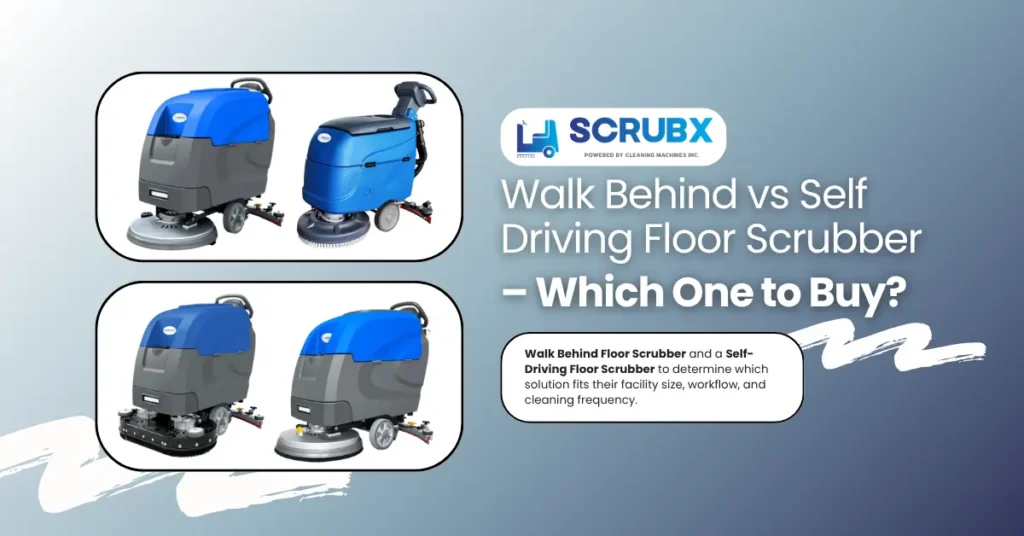
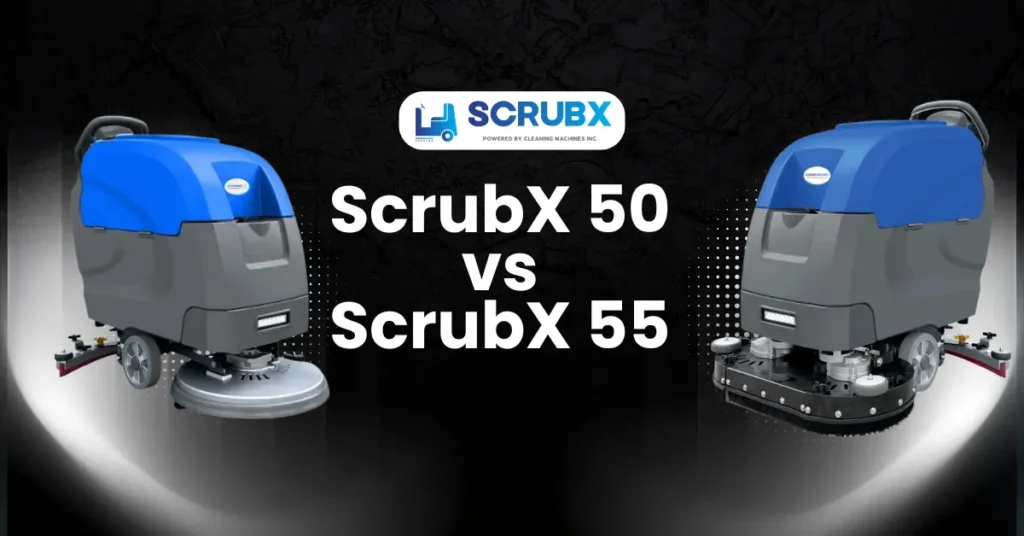
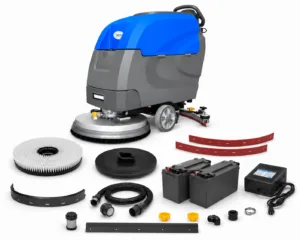
In a mid-sized warehouse, switching to a machine like the ScrubX 50 – Walk Behind Floor Scrubber transforms cleaning from a manual chore into a controlled process. Instead of relying on human effort, the machine ensures consistent results across the entire floor.
| Feature | Traditional Mop | Walk Behind Floor Scrubber |
| Cleaning Method | Manual wiping | Mechanical scrubbing + suction |
| Water Usage | Same dirty water reused | Separate clean & dirty tanks |
| Cleaning Consistency | Depends on worker | Uniform every time |
| Drying Time | Slow (wet floors remain) | Fast drying (seconds) |
| Dirt Removal | Spreads dirt | Lifts and removes dirt |
Which Cleans Faster in Real Commercial Environments?
Speed is where the difference becomes impossible to ignore.
Mopping Productivity
- Approx. 200–300 sq. meters per hour
- Requires breaks and frequent water changes
- Slower in high-traffic or dirty areas
Scrubber Productivity
- 1,500–3,000+ sq. meters per hour
- Continuous operation with minimal interruption
- Faster drying reduces downtime
Real Business Scenario
A retail store with daily foot traffic needs floors cleaned before opening.
- With a mop: 2–3 staff members, 2 hours
- With a scrubber: 1 operator, 30–40 minutes
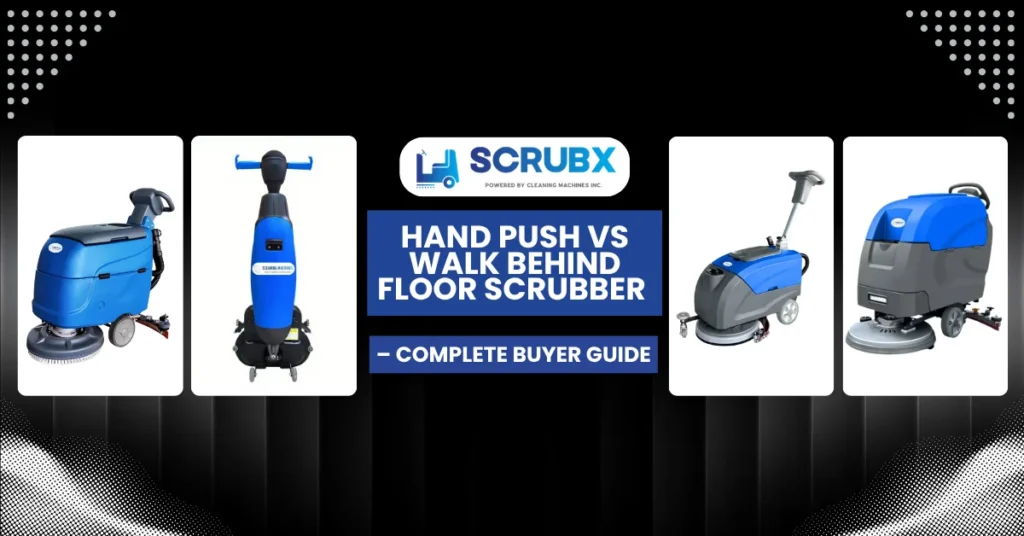
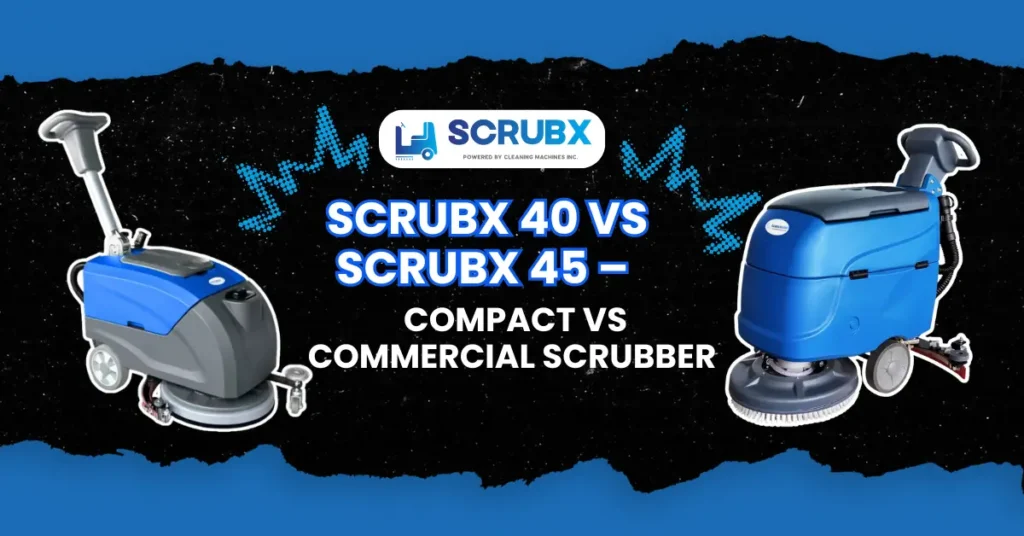
Using a compact solution like the ScrubX 40 – Foldable Hand Push Scrubber, even smaller teams can dramatically reduce cleaning time without increasing manpower.
| Factor | Mop Cleaning | Floor Scrubber |
| Area Covered / Hour | 200–300 sq. meters | 1500–3000+ sq. meters |
| Workforce Required | 2–3 people | 1 operator |
| Time for Medium Facility | 2–3 hours | 30–60 minutes |
| Cleaning Speed | Slow | High-speed |
| Operational Downtime | High | Minimal |
Which Method Is More Hygienic for Businesses?
Clean-looking floors are not always hygienic floors.
The Hygiene Problem with Mops
- Cross-contamination between areas
- Bacteria remain in mop fibers
- Dirty water spreads germs
Scrubber Advantage
- Uses fresh water continuously
- Removes dirty water immediately
- Reduces bacterial spread significantly
Real Scenario
In a clinic setting, using a mop can transfer contaminants from one room to another. A machine like the ScrubX 45 – Walk Behind Floor Scrubber ensures separation of clean and dirty water, making it far more suitable for hygiene-sensitive environments.
What Are the Hidden Costs of Using a Mop?
Mops seem cheap—but that’s only upfront.
1. Labour Costs
- More workers required
- Longer cleaning times
- Increased supervision
2. Time Costs
Time equals money in commercial environments.
- Slower cleaning = operational delays
- Cleaning often needs to be repeated
3. Water & Chemical Waste
- Frequent bucket refills
- Inefficient chemical usage
4. Re-cleaning Costs
Poor cleaning leads to:
- Faster dirt buildup
- More frequent cleaning cycles
Example
A facility using manual cleaning spends hours re-cleaning high-traffic zones daily. Switching to a machine like the ScrubX MOP – Folding Hand Push Floor Scrubber reduces repeat cleaning because it delivers more effective results in a single pass.
Can a Floor Scrubber Actually Save Money Long Term?
This is where most businesses hesitate—but also where the biggest advantage lies.
ROI Breakdown
Savings Areas:
- Reduced labour requirements
- Faster cleaning cycles
- Lower water and chemical usage
- Less wear on flooring
| Cost Factor | Mop | Floor Scrubber |
| Initial Cost | Low | Higher upfront |
| Labour Cost | High (ongoing) | Low |
| Water & Chemical Use | High | Optimized |
| Cleaning Frequency | More frequent | Less frequent |
| Long-Term Cost | Expensive | Cost-efficient |
Long-Term Impact
- Fewer cleaning hours per week
- Lower operational costs
- Improved employee productivity
Real Example
A logistics facility reduced its cleaning workforce from 4 people to 2 after adopting a scrubber system. A machine like the ScrubX 50D – Two Methods For Self-driving Floor Scrubber allows flexibility in operation, further improving efficiency.
Which Option Works Better for Different Business Types?
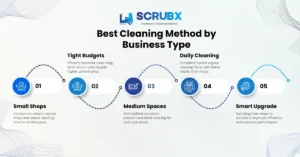
Small Businesses
Problem:
Limited staff and tight budgets.
Solution:
Compact, efficient cleaning tools.
Recommendation:
A small scrubber instead of manual mopping.
Example:
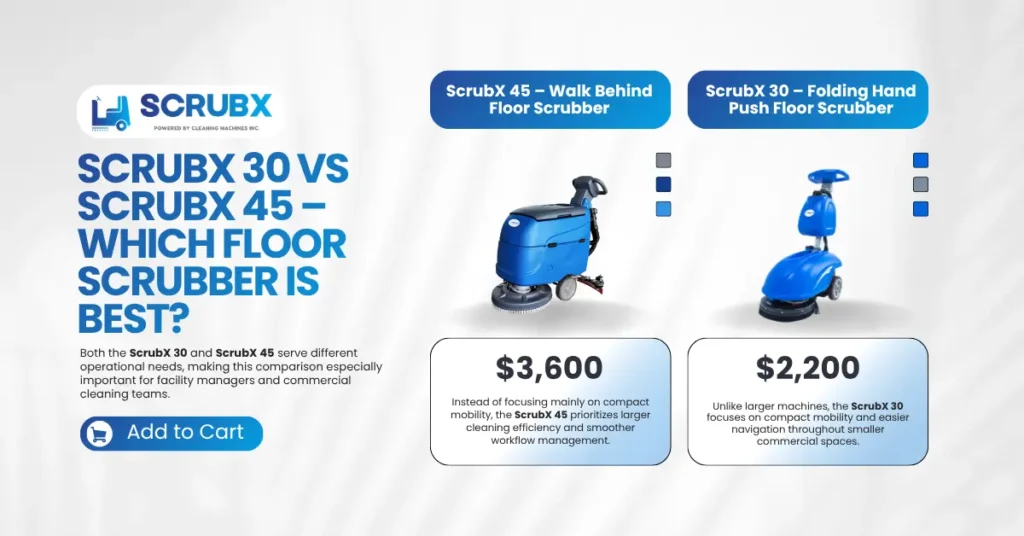
A café switching from mops to the ScrubX 30 – Folding Hand Push Floor Scrubbe can clean faster without hiring extra staff.
Medium Facilities
Problem:
Moderate floor area with regular cleaning needs.
Solution:
Consistent and scalable cleaning system.
Recommendation:
Walk-behind scrubbers.
Example:
A showroom using the ScrubX 45 – Walk Behind Floor Scrubber ensures uniform cleaning across all sections daily.
Large Commercial Spaces
Problem:
Huge floor areas, high traffic, strict timelines.
Solution:
High-efficiency machines with minimal downtime.
Recommendation:
Advanced or semi-automated scrubbers.
Example:
A warehouse using the ScrubX 55 – Self-Driving Floor Scrubber can handle large areas quickly with minimal operator effort.
When Is a Mop Still Useful?
Despite its limitations, a mop isn’t completely obsolete.
Situations Where Mops Still Work
- Very small spaces
- Spot cleaning spills
- Areas inaccessible to machines
- Emergency cleaning
However, relying on mops as the primary cleaning method in commercial environments is no longer practical.
What Features Make Scrubbers a Better Investment?
Modern floor scrubbers are designed for efficiency and control.
Key Features
- Battery Operation
- Enables cordless cleaning
- Ideal for large spaces
- Tank System
- Separate clean and dirty water
- Improves hygiene
- Brush Pressure
- Deep cleaning capability
- Removes stubborn dirt
Example
A machine like the ScrubX 50 – Walk Behind Floor Scrubber combines these features to deliver consistent, high-quality results across different surfaces.
Why Are Businesses Switching to Scrubbers in 2026?
The shift is driven by real operational challenges.
Key Drivers
- Rising labour costs
- Need for faster cleaning
- Higher hygiene standards
- Larger commercial spaces
Industry Trend
Businesses are no longer asking “Should we upgrade?”
They are asking “How soon can we switch?”
A practical example is facilities adopting compact solutions like the ScrubX 40 – Foldable Hand Push Scrubber to modernize cleaning without major operational changes.
How Do You Decide What’s Right for Your Business?
Choosing between a mop and a scrubber depends on multiple factors.
Decision Framework
- Floor Size
- Small: compact scrubber
- Medium: walk-behind
- Large: advanced scrubber
- Budget
- Consider long-term savings, not just upfront cost
- Cleaning Frequency
- Daily cleaning favors machines
- Labour Availability
- Limited staff = scrubber advantage
Example
A business upgrading from manual cleaning often starts with a mid-range solution like the ScrubX 45 – Walk Behind Floor Scrubber to balance cost and efficiency.
Why Do Businesses Trust Scrubx?
Scrubx has positioned itself as a practical solution provider for modern commercial cleaning challenges.
Experience
Understanding real business pain points—not just selling machines.
Reliability
Machines designed for consistent performance in commercial environments.
Commercial Focus
Solutions tailored for:
- Warehouses
- Retail stores
- Healthcare facilities
- Industrial spaces
Instead of offering generic products, Scrubx aligns its solutions with actual operational needs.
Myth vs Reality
Myth: Mops are cheaper
Reality: They cost more over time due to labour and inefficiency
Myth: Scrubbers are only for large businesses
Reality: Compact models make them accessible for small businesses
Myth: Mopping is cleaner
Reality: It often spreads dirt instead of removing it
FAQs
Is a floor scrubber better than a mop?
Yes, in most commercial environments, a floor scrubber provides deeper cleaning, faster results, and better hygiene. Mops rely heavily on manual effort and often reuse dirty water. Scrubbers separate clean and dirty water, ensuring more effective cleaning.
Do scrubbers really clean better?
Scrubbers use mechanical brushes and controlled water flow, which removes dirt instead of spreading it. This results in more consistent and hygienic cleaning. They also reach deeper into surface textures compared to mops.
Are floor scrubbers worth the cost?
While the upfront cost is higher, scrubbers reduce labour, save time, and lower long-term operational expenses. Most businesses recover the investment through improved efficiency. Over time, they are significantly more cost-effective than mopping.
Can small businesses use scrubbers?
Yes, compact and foldable scrubbers are designed specifically for small spaces. They are easy to operate and don’t require large budgets or teams. Even small businesses can benefit from faster and better cleaning.
How much time can a scrubber save?
A scrubber can reduce cleaning time by up to 70–80% compared to manual mopping. Large areas that take hours with a mop can be cleaned in under an hour. This allows staff to focus on other tasks.
What is the lifespan of a floor scrubber?
A well-maintained floor scrubber can last 5–10 years depending on usage. Regular maintenance and proper handling extend its life significantly. This makes it a reliable long-term investment for businesses.