Commercial cleaning environments are full of hidden risks. Wet floors can lead to serious slip-and-fall accidents, improper handling of machines can cause injuries, and electrical components increase the danger when water is involved. A floor scrubber may look simple to operate, but without proper understanding, it can become a source of workplace incidents rather than a solution. From crowded retail stores to large industrial spaces, even a small mistake during cleaning can impact employees, customers, and overall operations.
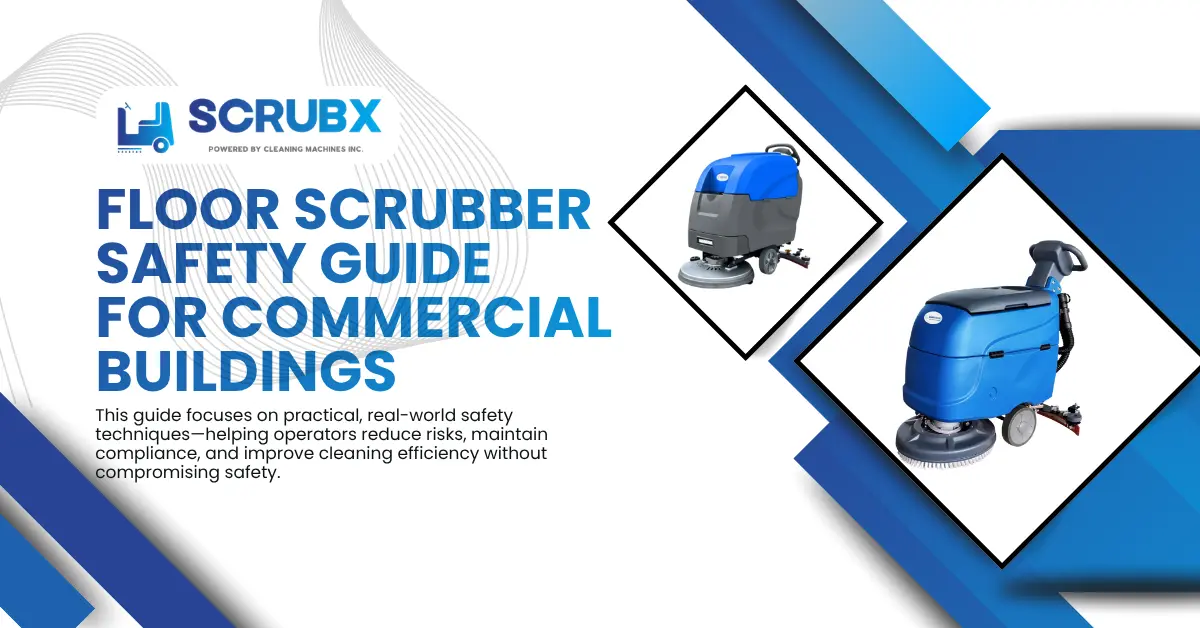
That’s why structured safety practices and operator training are non-negotiable. Machines from Scrubx are designed for efficiency and reliability, but safe performance depends on how they are used. This guide focuses on practical, real-world safety techniques—helping operators reduce risks, maintain compliance, and improve cleaning efficiency without compromising safety.
Why Is Floor Scrubber Safety Important in Commercial Buildings?
Safety in commercial cleaning is directly linked to business continuity and reputation. Poor safety practices can result in injuries, legal claims, and operational downtime.
- Employee Safety: Operators working with heavy or powered equipment face risks of strain, slips, and improper handling injuries.
- Customer Protection: In public-facing spaces, unsafe cleaning can lead to accidents involving visitors.
- Legal Liability: Negligence in safety protocols can result in costly claims and compliance violations.
- Workplace Standards: Following commercial cleaning safety practices ensures regulatory compliance and smoother operations.
A well-trained operator using proper techniques doesn’t just clean better—they protect the entire environment.
What Are the Most Common Floor Scrubber Safety Risks?
| Risk Type | Real-World Issue | Prevention Method |
| Slip Hazards | Wet floors causing falls | Use proper drying passes + warning signs |
| Electrical Risk | Water exposure to battery/cables | Keep charging area dry + inspect connections |
| Operator Error | Loss of control or sudden movement | Train operators + maintain steady speed |
| Tight Space Collisions | Hitting objects or people in narrow areas | Use compact machines + slow maneuvering |
Slip and Fall Hazards
Wet floors are the most common and dangerous issue in commercial cleaning.
- Water residue left behind after cleaning
- Lack of proper drying systems
- Missing warning signage
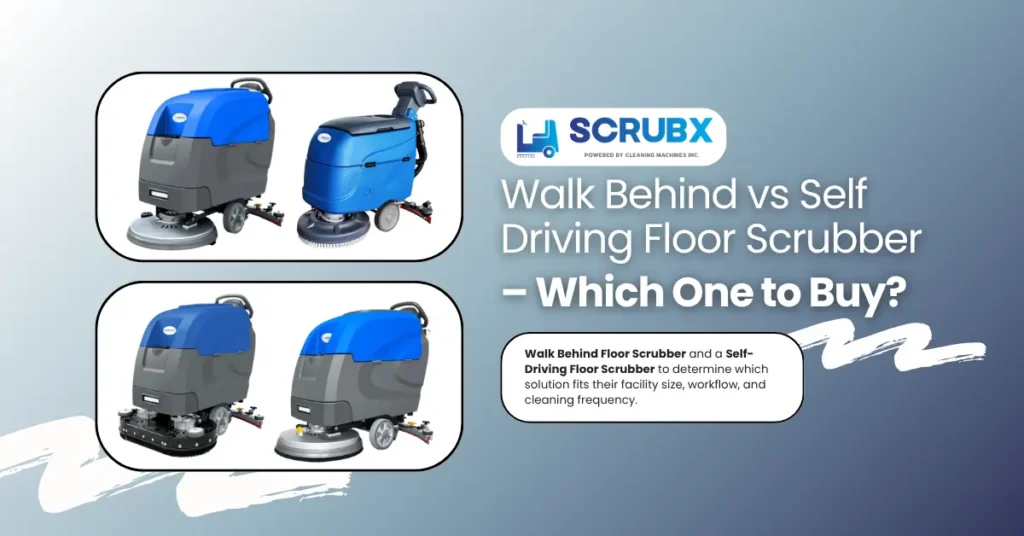
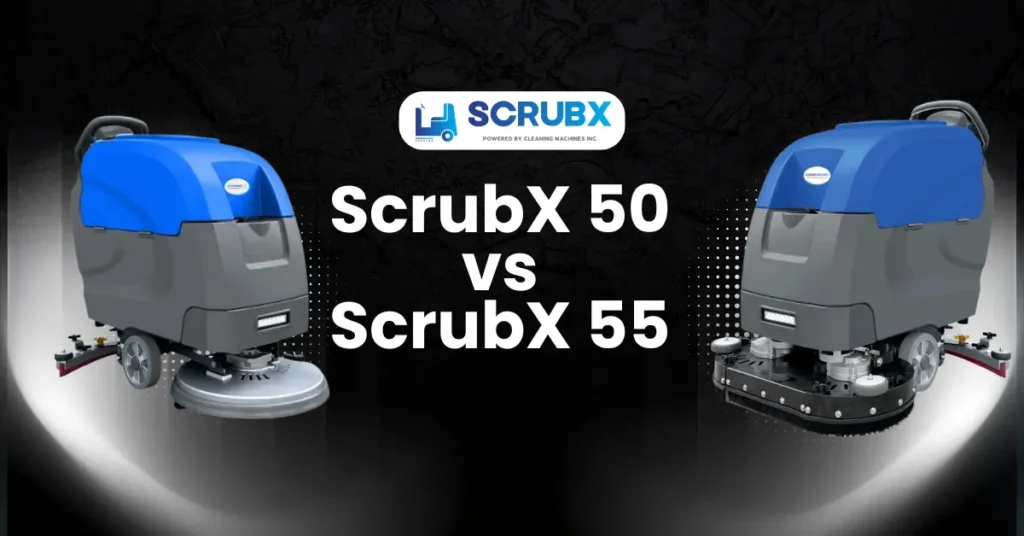
When using ScrubX 50 – Walk Behind Floor Scrubber, operators must ensure consistent water control and proper drying passes. This type of Walk behind floor scrubbers allows better control over cleaning paths, helping reduce excess moisture and lowering slip risks when used correctly.
Electrical and Battery-Related Risks
Water and electricity are a dangerous combination if mishandled.
- Charging batteries in wet environments
- Overcharging or improper battery care
- Damaged cables or exposed connections
The ScrubX 55 – Self-Driving Floor Scrubber requires strict attention to battery safety protocols. As an advanced self-driving floor scrubber, it depends on stable power systems. Operators must ensure dry charging areas, proper battery cycles, and routine inspection to prevent electrical hazards.
Operator Handling Mistakes
Human error is one of the leading causes of accidents.
- Moving too fast in busy areas
- Poor turning control
- Lack of familiarity with machine response
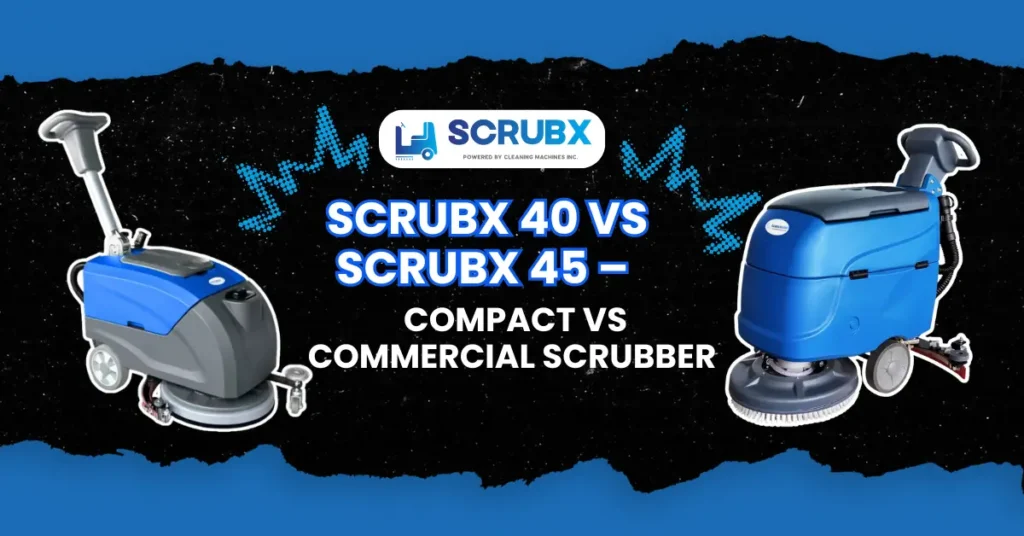
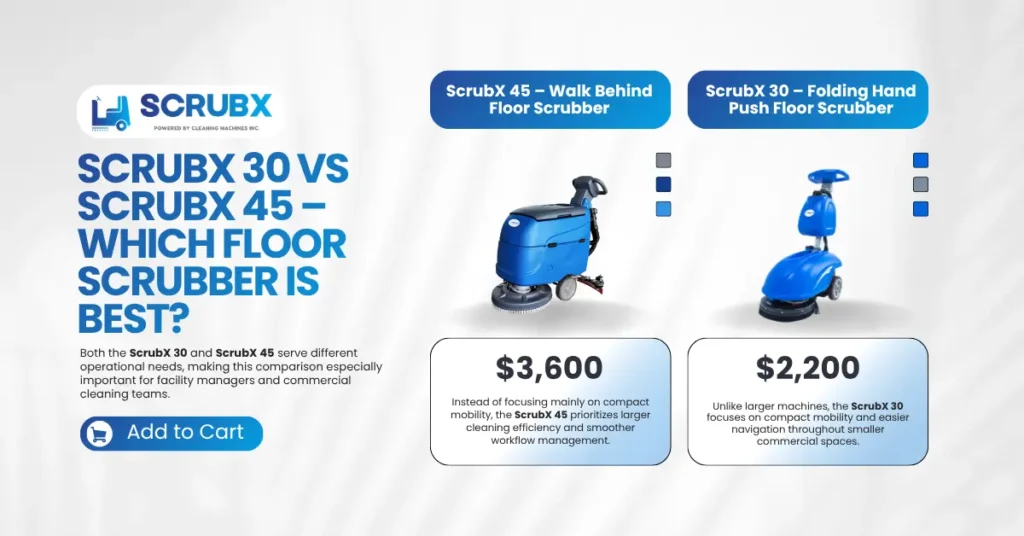
Using ScrubX 45 – Walk Behind Floor Scrubber, operators should maintain controlled speed and steady handling. This floor scrubber operator safety approach reduces sudden movements and improves overall machine stability during operation.
Cleaning in Tight or Crowded Areas
Limited space increases the chances of collisions and accidents.
- Narrow aisles
- Blind spots
- High foot traffic
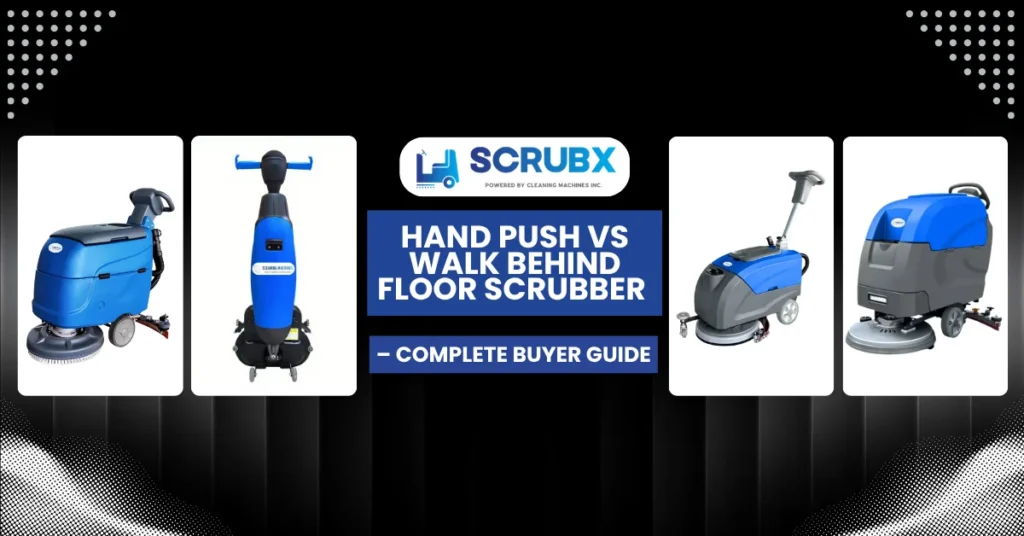
The ScrubX 30 – Folding Hand Push Floor Scrubber is ideal for compact environments. Its folding hand push design allows better maneuverability, but operators must still move carefully, maintain visibility, and avoid abrupt turns in tight areas.
How Do Different Floor Types Impact Scrubber Safety?
Different surfaces require different safety approaches. Using the wrong settings can increase risks instead of reducing them.
Hard Floors (Tile, Marble, Concrete)
These surfaces become extremely slippery when over-wetted. Operators must use controlled water flow and proper drying passes.
Textured or Uneven Floors
Uneven surfaces can affect machine balance and increase the risk of sudden movement. Slower speeds and steady handling are essential.
Sensitive Surfaces
Delicate flooring requires low-pressure cleaning to prevent damage and maintain safe traction after cleaning.
Understanding floor type ensures better cleaning results with reduced accident risk.
How to Operate a Floor Scrubber Safely?
Safe operation starts before the machine is even turned on.
Pre-Operation Inspection
Check for visible damage, leaks, or loose parts before starting.
Correct Machine Setup
Ensure water levels, brushes, and settings match the floor type.
Controlled Speed
Avoid rushing—consistent, moderate speed improves safety and cleaning quality.
Situational Awareness
Always monitor surroundings, especially in shared spaces.
The ScrubX 50D – Two Methods For Self-driving Floor Scrubber requires extra attention because of its dual-mode functionality. Operators must clearly understand when to switch between manual and autonomous modes to avoid unexpected movement or collisions.
| Step | Action Required | Safety Benefit |
| Pre-Inspection | Check machine condition before use | Prevents unexpected breakdowns |
| Machine Setup | Adjust water, brushes, and settings | Ensures controlled cleaning |
| Speed Control | Maintain slow and steady movement | Reduces collision risk |
| Awareness | Monitor surroundings continuously | Protects people in shared spaces |
What Personal Protective Equipment (PPE) Should Operators Use?
Safety is not just about the machine—it’s also about the operator.
- Non-slip footwear to prevent falls on wet surfaces
- Gloves for handling chemicals and machine parts
- Protective eyewear in splash-prone environments
- High-visibility vests in busy commercial spaces
Using PPE adds an extra layer of protection, especially in high-risk cleaning zones.
What Safety Checks Should Be Done Before Every Use?
Routine inspection is a key part of any cleaning equipment safety guide.
- Check brushes and pads for wear or debris
- Inspect battery or cables for damage
- Ensure tanks are clean and properly filled
- Look for leaks or unusual sounds
Even compact machines like the ScrubX 40 – Foldable Hand Push Scrubber need consistent checks. Its foldable structure makes storage easy, but operators must confirm all parts are securely locked before use.
How to Reduce Risk While Cleaning Public Areas?
Cleaning in active environments requires planning and control.
- Use clear warning signs
- Clean during low-traffic hours
- Work in small, manageable sections
The ScrubX MOP – Folding Hand Push Floor Scrubber is well-suited for such environments. Its simple design allows operators to maintain control and respond quickly to nearby movement, reducing risk in public-facing areas.
How to Handle Emergency Situations During Scrubber Operation?
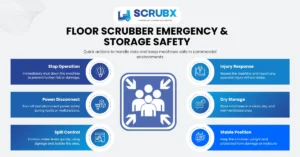
Even with precautions, emergencies can happen. Operators must be prepared.
Machine Malfunction
Immediately stop operation and disconnect power if safe to do so.
Water Leakage or Spill Spread
Contain the area quickly using signage and isolate the affected zone.
Operator Injury
Stop the machine, secure the area, and report the incident immediately.
Quick response reduces damage and prevents escalation of safety risks.
What Are Best Practices for Safe Storage of Scrubber Machines?
Proper storage prevents long-term safety issues and equipment damage.
- Store machines in a dry, well-ventilated area
- Keep them in a stable, upright position
- Avoid exposure to moisture or extreme temperatures
- Disconnect power sources when not in use
Safe storage ensures machines remain reliable and reduces unexpected failures during operation.
How Does Poor Maintenance Create Safety Risks?
Neglected maintenance is a hidden danger in commercial cleaning.
- Worn brushes reduce cleaning efficiency and leave slippery residue
- Faulty batteries increase risk of overheating or failure
- Leaks can create unexpected wet areas
Regular maintenance ensures that Scrubx machines operate safely and consistently, reducing long-term risks.
How to Train Staff for Safe Scrubber Operation?
Training is the foundation of floor scrubber operator safety.
Basic Training Checklist
- Machine controls and functions
- Emergency stop procedures
- Safe movement techniques
Hands-On Demonstration
Operators should practice in controlled environments before real use.
Regular Refresher Training
Ongoing training helps reinforce safety habits and update staff on best practices.
Businesses that invest in training see fewer accidents and better cleaning efficiency.
What Safety Features Should You Look for in a Floor Scrubber?
Choosing the right machine is part of a strong safety strategy.
- Emergency Stop Systems for immediate shutdown
- Stable Design to prevent tipping
- User-Friendly Controls for easy handling
- Clear Visibility for safe navigation
A well-designed machine reduces operator strain and improves overall control during cleaning.
| Feature | Function | Safety Impact |
| Emergency Stop | Instantly shuts down machine | Prevents accidents in emergencies |
| Stable Design | Keeps machine balanced | Reduces tipping risk |
| Easy Controls | Simple operation system | Minimizes operator errors |
| Clear Visibility | Better line of sight for operator | Improves navigation safety |
Why Scrubx Machines Support Safe Commercial Cleaning
Scrubx machines are built with commercial safety in mind.
- Designed specifically for high-demand commercial environments
- Focus on operator-friendly controls for reduced errors
- Built with stable structures for safer handling
- Trusted by businesses for reliable and safe cleaning operations
By combining proper usage with well-designed equipment, businesses can significantly improve workplace safety.
What Are Common Mistakes Businesses Make in Cleaning Safety?
Many safety issues come from poor planning rather than equipment.
- Ignoring operator training
- Skipping daily inspections
- Cleaning during peak hours
- Using incorrect machine settings
Avoiding these mistakes helps businesses maintain higher safety standards and smoother operations.
FAQs
What are the main safety risks when using a floor scrubber?
The primary risks include slip and fall hazards, electrical exposure, and operator mistakes. Wet floors left behind can cause serious injuries, while improper battery or cable handling increases electrical danger. In addition, untrained operators may lose control of the machine, leading to collisions or unsafe cleaning patterns.
How can I prevent accidents while using a scrubber machine?
Accidents can be minimized by combining proper training, pre-use inspections, and controlled operation. Operators should always check the machine condition, use correct settings, and maintain steady movement. Awareness of surroundings, especially in shared spaces, is critical for preventing unexpected incidents.
Is it safe to use floor scrubbers in public areas?
Yes, but only when proper precautions are followed. Operators must use warning signage, isolate cleaning zones, and work during low-traffic periods whenever possible. Machines should be handled at slower speeds, ensuring pedestrians are not exposed to wet or recently cleaned surfaces.
Do all scrubbers require safety training?
Yes, every type of scrubber—from manual to autonomous—requires training. Even compact machines can cause injuries if misused. Training ensures operators understand machine controls, safe handling techniques, and emergency procedures, which significantly reduces workplace risks.
How often should safety checks be performed?
Safety checks should be conducted before every single use, not occasionally. Daily inspections help identify leaks, worn brushes, or battery issues early. Regular checks ensure consistent performance and prevent small problems from turning into serious safety hazards.
What safety features should I look for when buying a scrubber?
Key safety features include emergency stop buttons, stable construction, responsive controls, and clear operator visibility. Machines designed with these features reduce operator strain and improve control, making them safer for both the user and the surrounding environment.