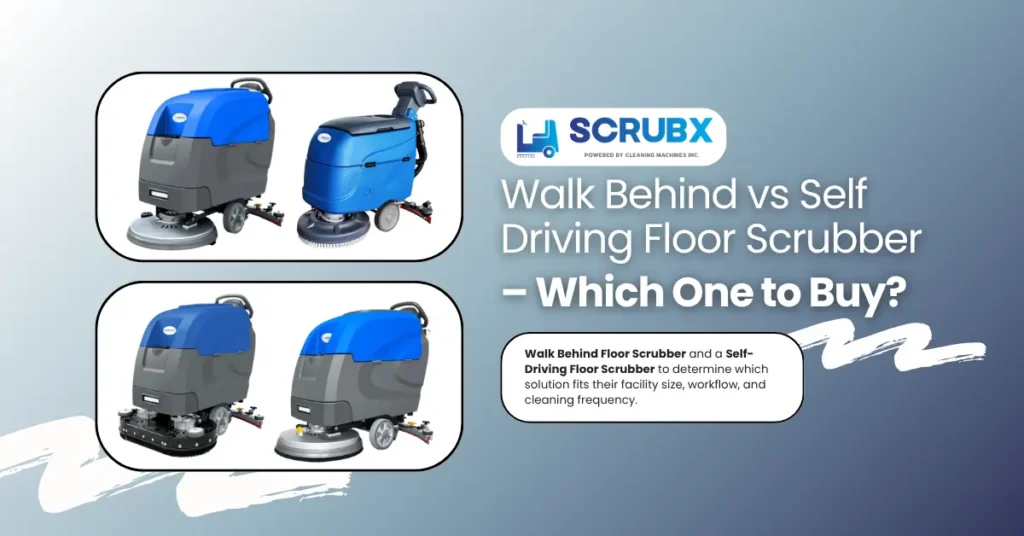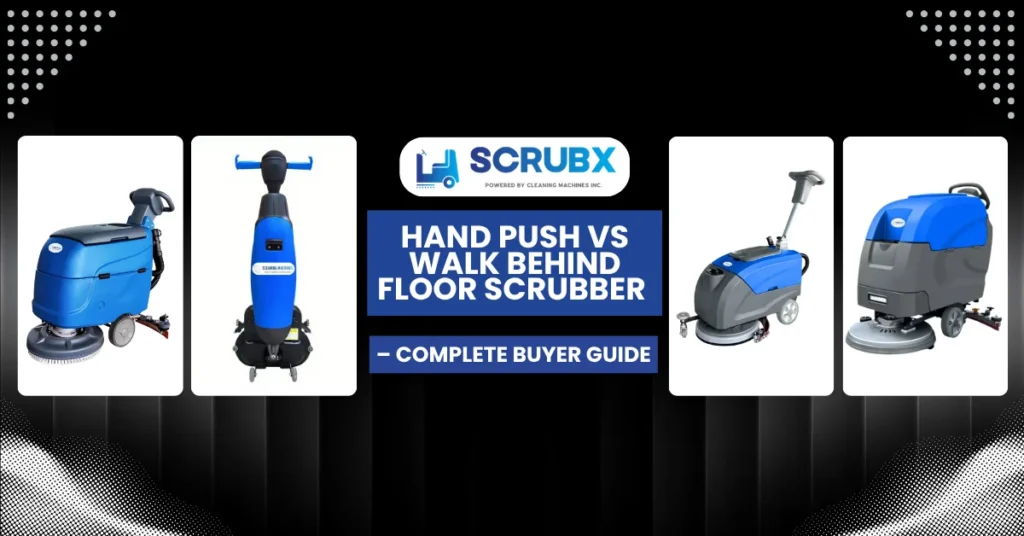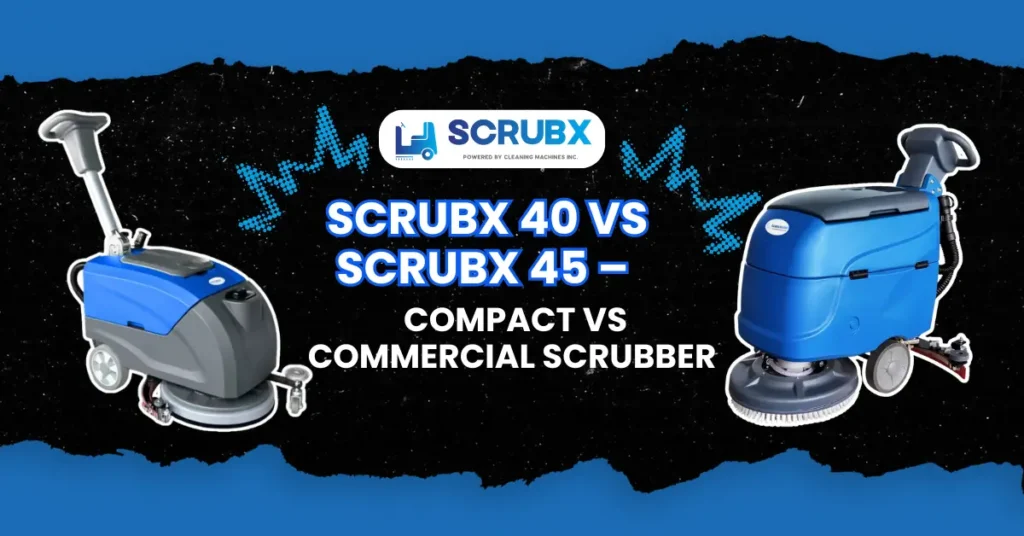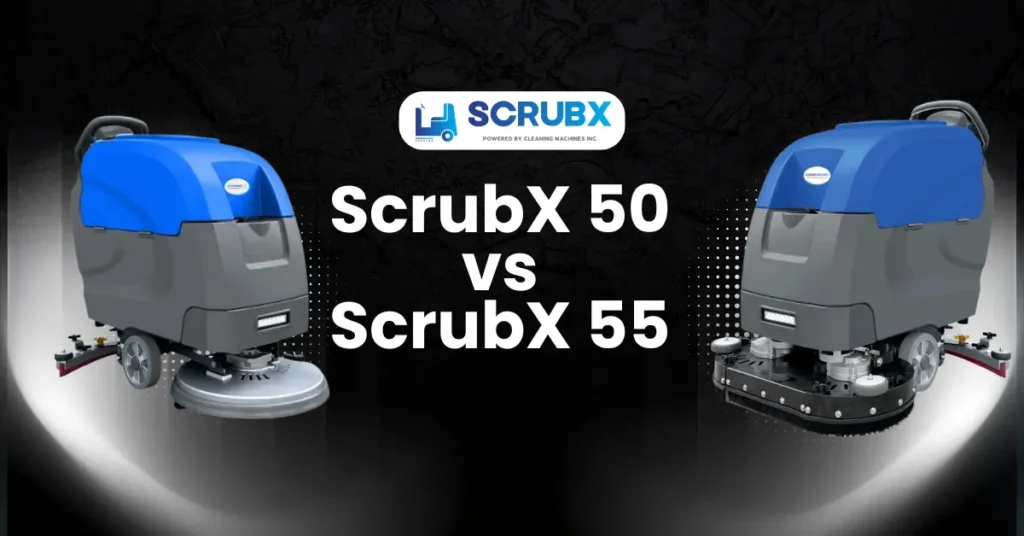
Most floor scrubbers don’t fail because of poor manufacturing—they fail because of neglect and improper maintenance habits. In real-world commercial environments, machines that should last years often start losing efficiency within just a few months. Brushes wear out unevenly, suction weakens, and batteries drain faster than expected. The biggest mistake? Treating a scrubber like a one-time investment instead of a system that needs consistent care. When businesses skip maintenance, they end up paying far more in repairs or early replacement than they would have spent on routine servicing.
Preventive maintenance is what separates a short-lived machine from one that delivers long-term ROI. Even though Scrubx machines are built for durability and commercial-grade use, they still require proper care to perform at their best. This guide breaks down technician-level maintenance practices—covering everything from daily cleaning habits to battery management—so you can extend scrubber lifespan, reduce downtime, and maintain peak cleaning performance.
Why Do Walk Behind Scrubbers Lose Performance Over Time?
Mechanical Wear and Operational Stress
Every scrubber faces gradual wear. Brushes lose stiffness, squeegee blades lose edge precision, and motors experience strain from continuous use. Over time, this reduces cleaning consistency and efficiency.
Tank Contamination Issues
Dirty water tanks are one of the most ignored causes of performance drop. Residue buildup leads to blockages, odor issues, and suction inefficiency—all of which directly affect cleaning results.
Battery Degradation
Improper charging cycles, overuse, and poor storage conditions slowly damage batteries. This results in shorter runtime and inconsistent power output.
Improper Usage Habits
Using incorrect chemicals, overloading machines, or skipping maintenance routines accelerates internal damage. These habits often go unnoticed until performance drops significantly.
How Does Brush Pressure and Pad Selection Affect Maintenance?
Brush pressure is often ignored, but incorrect pressure settings can wear out both the brush and motor faster. Too much pressure doesn’t mean better cleaning—it increases strain on internal components and reduces efficiency.
Pad selection also matters. Using aggressive pads on delicate floors damages both the surface and the machine. With ScrubX 50 – Walk Behind Floor Scrubber, correct brush pressure combined with the right pad type ensures balanced wear, reducing long-term maintenance needs and improving cleaning consistency.
How Can Daily Maintenance Extend Machine Life?
Essential Daily Habits
- Always empty and rinse both clean and dirty water tanks
- Inspect brushes for debris or uneven wear
- Wipe down the machine and allow it to dry completely
Neglecting these basics leads to internal buildup that slowly damages components.
Real Maintenance Insight
With the ScrubX 50 – Walk Behind Floor Scrubber, daily tank cleaning plays a critical role in maintaining suction strength. Technicians often notice that machines with clean tanks retain consistent vacuum performance, while neglected units begin to leave water streaks on floors within weeks.
Why Is Water Quality Important in Scrubber Maintenance?
Hard water contains minerals that slowly build up inside tanks, pipes, and nozzles. Over time, this leads to scaling, which restricts water flow and reduces cleaning performance.
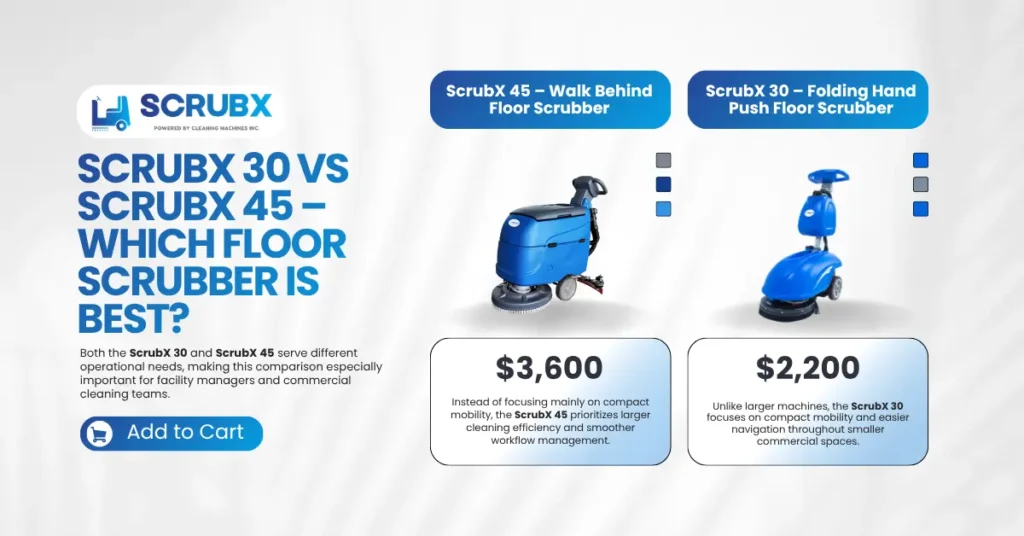
Using filtered or treated water can significantly reduce internal buildup. In machines like ScrubX 45 – Walk Behind Floor Scrubber, maintaining clean water flow ensures consistent solution distribution and prevents hidden blockages that affect long-term efficiency.
What Weekly Maintenance Steps Should You Never Skip?
Weekly Inspection Checklist
- Check squeegee blades for cracks or uneven edges
- Clean and inspect filters to prevent clogging
- Tighten loose bolts and connections
Why It Matters
Machines like the ScrubX 45 – Walk Behind Floor Scrubber rely heavily on balanced components. A slightly loose squeegee assembly or clogged filter can cause uneven drying patterns and reduce cleaning quality. Weekly checks prevent small issues from turning into costly repairs.
How to Maintain Battery Performance for Longer Lifespan?
Battery Care Principles
- Avoid deep discharges—charge before battery drops too low
- Never overcharge or leave plugged in continuously
- Store in a cool, dry environment
Advanced Machine Insight
The ScrubX 55 – Self-Driving Floor Scrubber depends on stable battery output for consistent autonomous performance. Poor charging habits can disrupt navigation cycles and reduce runtime efficiency. Proper battery care directly impacts uptime and operational reliability.
How Do Electrical Components Impact Machine Longevity?
Electrical systems are the backbone of modern scrubbers, especially in advanced units. Loose wiring, moisture exposure, or dust buildup can lead to intermittent failures or sudden shutdowns.
With ScrubX 55 – Self-Driving Floor Scrubber, regular inspection of electrical connections and keeping components dry ensures stable operation. Preventive checks here can save you from expensive electronic repairs and unexpected downtime.
How to Prevent Water Tank and Suction System Issues?
Common Problems
- Dirty water tank residue buildup
- Blocked suction hoses
- Persistent foul odors
Maintenance Technique
- Rinse tanks thoroughly after every shift
- Flush suction lines weekly
- Use mild cleaning agents to prevent residue
Practical Example
Even compact units like the ScrubX 30 – Folding Hand Push Floor Scrubber can develop suction issues if tanks are not cleaned regularly. Small machines are more sensitive to buildup, making routine cleaning even more critical.
What Are the Most Common Operator Mistakes?
Critical Errors to Avoid
- Using harsh or incorrect chemicals
- Overfilling tanks beyond capacity
- Skipping maintenance routines
Impact on Performance
The ScrubX 50D – Two Methods For Self-driving Floor Scrubber features dual-function operation. Misuse—especially incorrect chemical use—can damage internal systems and reduce efficiency in both cleaning modes. Proper operator training is essential.
How Does Overuse Without Cooldown Damage the Machine?
Continuous operation without breaks overheats motors and reduces overall machine efficiency. Many operators run machines for extended periods without allowing cooling time, especially in large facilities.
In dual-mode machines like ScrubX 50D – Two Methods For Self-driving Floor Scrubber, overuse can strain both drive and cleaning systems. Scheduled pauses during long cleaning sessions help maintain motor health and extend overall lifespan.
| Mistake | Impact on Machine | Long-Term Result |
| Using wrong chemicals | Foam buildup, internal damage | Reduced efficiency |
| Skipping maintenance | Dirt accumulation | Early machine failure |
| Overloading machine | Motor strain | Component wear |
| Continuous overuse | Overheating | Reduced lifespan |
How to Store Walk Behind Scrubbers Properly?
Storage Best Practices
- Always store in a dry, moisture-free area
- Keep machine elevated if possible
- Ensure tanks are empty before storage
Storage Advantage Insight
The ScrubX 40 – Foldable Hand Push Scrubber offers a practical storage benefit. Its foldable design reduces space usage and minimizes exposure to environmental damage, helping extend overall machine life.
Why Is Pre-Storage Inspection Important?
Simply parking the machine after use isn’t enough. Small issues like minor leaks, loose hoses, or leftover debris can worsen during idle time.
Before storing machines like ScrubX 40 – Foldable Hand Push Scrubber, a quick inspection ensures that the machine is clean, dry, and damage-free. This prevents minor issues from turning into major repairs when the machine is used again.
How to Maintain Lightweight and Manual Scrubbers?
Simple Yet Critical Care
- Clean after every use
- Inspect moving parts manually
- Store properly to avoid corrosion
Practical Example
The ScrubX MOP – Folding Hand Push Floor Scrubber may be simple in design, but consistent cleaning and drying ensure long-term usability. Lightweight machines often last longer when basic care routines are followed strictly.
What Signs Indicate Your Scrubber Needs Servicing?
| Problem | Possible Cause | Maintenance Fix |
| Weak suction | Blocked hose or dirty tank | Clean tank and suction line |
| Streaky floors | Worn squeegee blades | Replace or adjust squeegee |
| Poor cleaning | Worn brush or wrong pad | Replace brush / correct pad |
| Fast battery drain | Improper charging habits | Follow correct charging cycle |
Diagnostic Indicators
- Reduced suction power even after cleaning
- Uneven or streaky floor results
- Unusual noises from motor or brushes
- Battery draining faster than normal
These symptoms usually indicate internal wear, blockages, or component failure that requires immediate attention.
How Often Should You Service a Walk Behind Scrubber?
Maintenance Frequency Guide
- Daily: Cleaning tanks, wiping machine
- Weekly: Inspecting components and filters
- Monthly: Deep cleaning and part inspection
- Every 6–12 Months: Professional servicing
Usage intensity matters—machines in high-traffic areas need more frequent servicing compared to light-use environments.
| Maintenance Type | Tasks Included | Frequency |
| Daily Care | Tank cleaning, brush check, drying machine | After every use |
| Weekly Check | Squeegee inspection, filter cleaning, tighten parts | Once a week |
| Monthly Maintenance | Deep cleaning, hose inspection, system check | Every 4 weeks |
| Professional Servicing | Internal inspection, battery testing, repairs | Every 3–6 months |
Why Scrubx Machines Are Built for Long-Term Performance
Engineered for Durability
Scrubx machines are designed with commercial-grade components that withstand heavy usage.
Maintenance-Friendly Design
Easy access to tanks, filters, and brushes makes routine servicing straightforward and efficient.
Built for Real-World Environments
From warehouses to retail spaces, Scrubx machines are structured to handle demanding conditions.
Trusted by Professionals
Widely used by businesses across Canada, Scrubx has built a reputation for reliability, efficiency, and long-term value.
FAQs
How do I maintain a walk behind floor scrubber properly?
Proper maintenance includes daily tank cleaning, brush inspection, and drying the machine after use. Weekly checks should cover squeegees, filters, and loose components. Monthly, deeper inspection of internal systems is important. Following a routine schedule prevents performance drop and costly repairs.
How long does a scrubber machine last with proper maintenance?
With consistent care, a commercial scrubber can last 5–7 years or even longer. Lifespan depends on usage intensity, maintenance discipline, and operator handling. Machines used in high-traffic areas require stricter maintenance routines. Neglect can reduce lifespan by almost half.
What happens if I don’t clean the tanks regularly?
Dirty tanks lead to residue buildup, bad odors, and bacterial growth. Over time, this blocks suction systems and reduces cleaning efficiency. It can also damage internal components like hoses and filters. Regular cleaning prevents both hygiene and performance issues.
How can I improve battery life of my scrubber?
Avoid overcharging and never leave the battery fully drained for long periods. Charge only when needed and disconnect once full. Store the machine in moderate temperatures to prevent battery stress. Consistent charging habits can significantly extend battery lifespan.
When should I replace brushes and squeegees?
Brushes should be replaced when bristles become uneven or lose stiffness. Squeegees need replacement when they start leaving streaks or fail to pick up water properly. Regular inspection helps identify wear early. Delayed replacement reduces cleaning quality and efficiency.
Do all scrubbers require the same level of maintenance?
No, maintenance varies based on machine type and complexity. Manual scrubbers need basic cleaning, while advanced machines require battery and electrical care. However, daily cleaning and inspection are essential for all machines. Skipping basics leads to performance issues regardless of size.